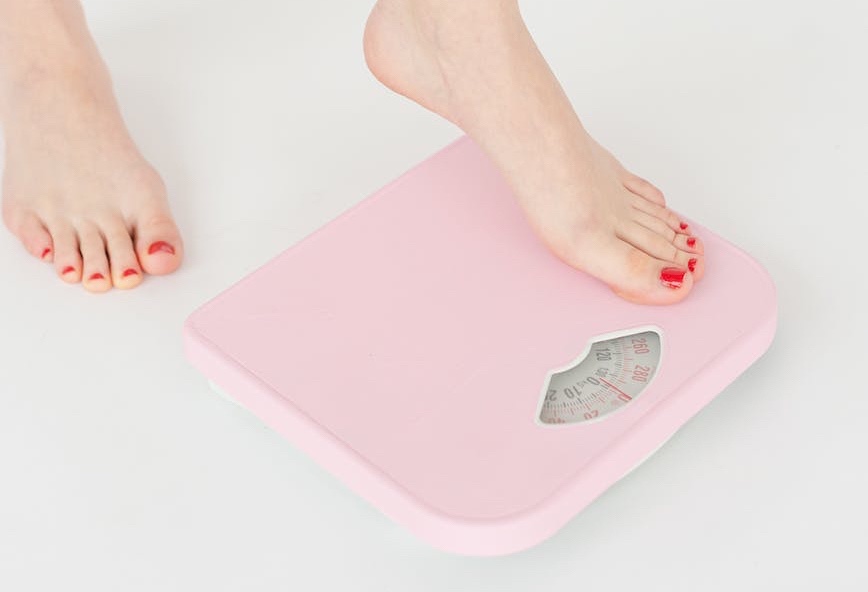
How often should you weigh in to check your maintenance progress? Short answer: it depends on the individual. For the long answer, read below to find out what studies and experts suggest. But in the end, it still comes down to what you feel is best for you!
I weigh myself daily, though I’ve been told by friends that this is excessive, and I can see their point. There are so many factors that cause weight variation, especially for younger women. Still, I like to keep on top of things to see what is working and what isn’t.
I was kind of embarrassed by my daily weigh-ins until I came across a study which showed that for the weight loss stage, weighing daily results in greater weight loss (1). The scientists found that dieters who weighed-in daily had better compliance with their weight control behaviors (1). There are similar studies that show that weighing daily is correlated with the most success, followed by weekly weigh-ins (2).
Can excessive weigh-ins be a sign of an eating disorder (ED) or body dysmorphia? Yes and no. It is true that those suffering from EDs self-weigh quite often, and that they frequently keep these weigh-ins secret (3). However, just because you step on the scale frequently does not mean you have an ED. Self-weighing can be effective for those without EDs, but if you have been diagnosed with anorexia nervosa, bulimia nervosa, or binge eating disorder it should be avoided as it is associated with greater shape and weight concerns (2). Please see your doctor for further information on this topic.
For more on body dysmorphia, body positivity, and body neutrality, see this post: https://lindawbrowning.com/2023/02/20/body-dysmorphia-related-concerns/
So when is daily self weighing a good idea? Weighing yourself daily is appropriate if it does not add to your stress level. It appears to be effective at preventing age-related weight gain and correlates with losing weight and keeping it off as well (4).
For some people, weighing in less frequently, particularly at a health care provider, can actually cause more harmful behavior. This is because it places a lot of importance on one particular weigh-in. If you are in this category, you may engage in behavior like fasting or crash dieting just before a check-up (4).
But for others, stepping on the scale, even in your own home with no one watching, produces more stress. If it affects the mood of your entire day, you’d probably be better off skipping those daily weigh-ins.
It’s also important to remember that weight is just one component of health. It’s likely not the best one, even accounting for height differences. In fact, some advise to never weigh in but to use other objective goals like body (tape) measurements or body fat percentage (5).
Is there a final answer? Yes, whatever works best for you is the answer. This is your weight maintenance journey!
The key with weighing is consistency (6).
- Weigh at the same time of day, preferably before eating or drinking, regardless of how often you step on the scale.
- Weigh at the same type of clothing (preferably none at all).
- Use the same scale and place it on a flat, hard surface.
- Distribute your weight equally on both feet.
- Remember that weight fluctuates so never go by a single reading, whether you’re weighing daily or less often.
For more on alternative measurements, please see this post: https://lindawbrowning.com/2023/02/16/body-measurements-waist-to-hip-ratios/
(1). https://www.ncbi.nlm.nih.gov/pmc/articles/PMC4380831/#__ffn_sectitle
(2). https://www.webmd.com/fitness-exercise/ss/slideshow-7-most-effective-exercises
(3). https://www.ncbi.nlm.nih.gov/pmc/articles/PMC5604338/
(4). https://www.health.com/weight-loss/how-often-should-you-weigh-yourself
(5). https://www.healthline.com/health/diet-and-weight-loss/how-often-should-i-weigh-myself#when-dieting
(6). https://www.livestrong.com/article/13768501-how-often-to-weigh-yourself/
 Maintain Weight Loss