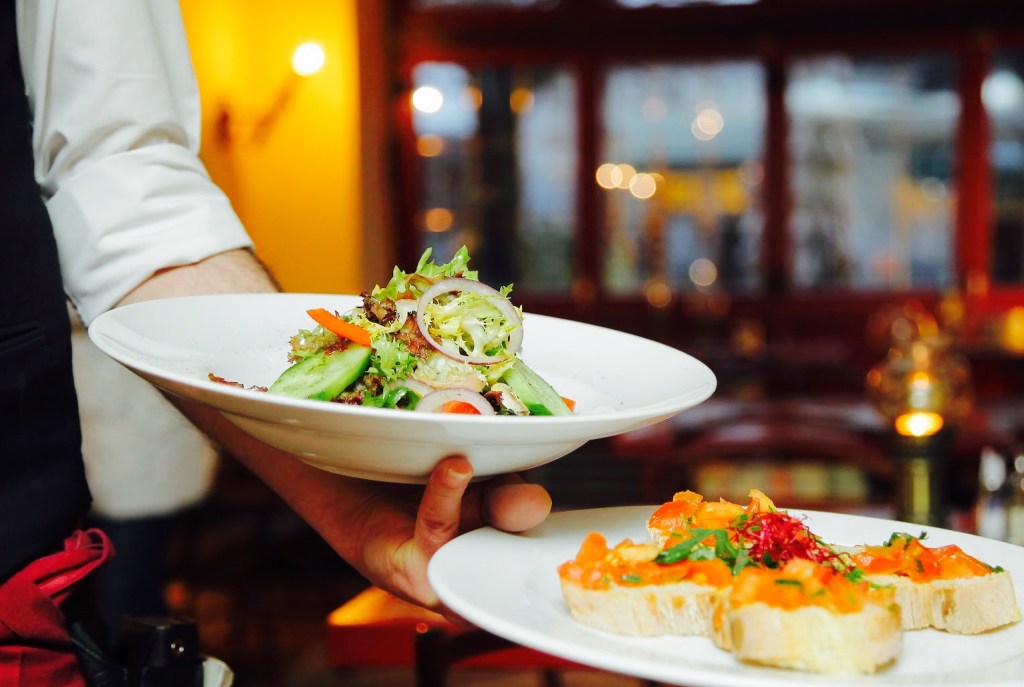
If you are a proponent of frequent weigh-ins like me, you may have noticed an unfortunate pattern between your weight and your restaurant visits. Eat out more often, and your weight goes up, even if you select menu items that are listed as lower calorie options. How is that possible? Could it be the added sodium? Could it be that the calories listed on the menu were inaccurate?
It’s a little complicated, but often it’s dishonesty, though sometimes it’s unintentional dishonesty. Here are some examples which researchers from Tufts University uncovered:
- “Olive Garden’s chicken and gnocchi soup had nearly double the listed 250 calories, and the minestrone soup more than doubled its 100-calorie claim, totaling 265.
- Bob Evans’ cranberry-pecan chicken salad with dressing, listed at 672 calories, had [between] 315 and 551 extra calories in two tests.
- P.F. Chang’s healthy-sounding brown rice measured 477 calories, more than double the menu number of 190.
- Four tests of On the Border’s chips and salsa found more than triple the claimed 430 calories, up to 1,511 actual calories” (1).
While Tufts researchers found that most menu calorie counts are relatively accurate, 20% were off by at least 100 calories. Sit down restaurants tended to be less accurate than fast food, reportedly due to poor portion control (1). But there are many other factors as well.
Who checks to see if the calorie counts are accurate? No one is the usual answer. According to NBC Affiliate 2News, “The FDA says restaurants must explain how they came up with the calorie results only if the FDA asks” (2). (Emphasis added.)
Restaurants typically add much more fat to foods than you would at home (3). Here’s an example that you may have noticed. A fried Chick-Fil-A sandwich with no added butter on the roll has 380 calories (4). But the default sandwich has a buttered roll. Add 60 calories of pure fat to that if you don’t remember to ask for “no butter,” and that’s assuming the employee isn’t being generous with the butter (5). Would you add that butter to a fried sandwich at home? I’m guessing that you would not.
This added fat is a part of the restaurant’s mission to make your meal as enjoyable as possible. They hijack the pleasure center in your brain with fat, sugar, and salt so you will want to return to get that hit again (3). And it’s in their best interest to do this, though not yours.
There are several other practices that restaurants have adopted to keep you coming back for more. These are more of an appeal to your wallet – so you’ll feel like you’re getting a good deal. They include huge portion sizes, free drink refills, free bread or chips as you are seated, special combos, and free add-ons like shredded cheese or extra dressings and sauces (3). None of these add much to the nutritional value, but they add plenty to the caloric value.
If you are mainly eating out for the taste of restaurant food, the video below will explain how you can replicate some of their methods at home, but with less fat (6):
While this video uses vegetables as the example, many of the same ideas apply to other foods, particularly proteins.
I hope this post made the importance of home meal prep clear. Eating out is great for celebrations and special occasions, but if you eat out on a regular basis, it can be more challenging to maintain your healthy weight.
(2). https://www.kjrh.com/news/national/calorie-count-test?_amp=true
(3). https://www.eatthis.com/restaurants-add-calories/
(4). https://mobile.fatsecret.com/calories-nutrition/chick-fil-a/sandwich-(no-butter)
(5). https://mobile.fatsecret.com/calories-nutrition/chick-fil-a/chicken-sandwich
 Maintain Weight Loss
As one who enjoys eating out, and too often just doesn’t feel like cooking, this was an important article for me. I especially liked the introduction to Ethan Chlebrowski. I’ll be following him for sure!
LikeLiked by 1 person
Yes, I he’s great! I think that if we pay attention to portion size and high fat sauces, we can do well at restaurants.
LikeLike