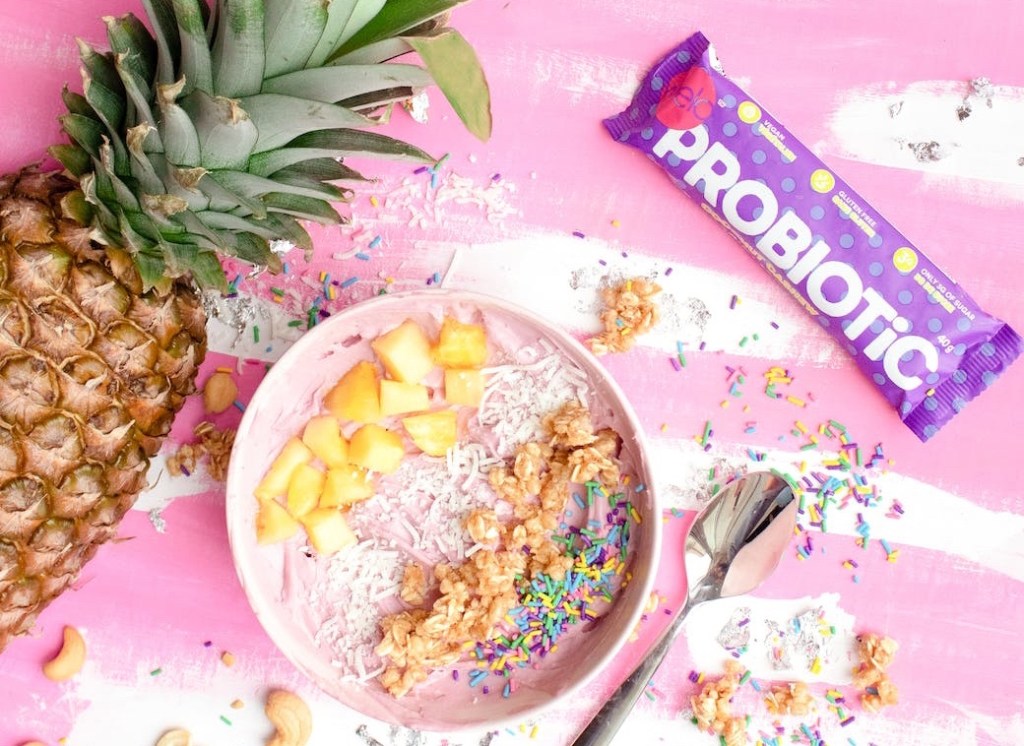
I am always looking for any help in maintaining my weight. There have been several studies in the past few years that have found that probiotics and prebiotics can be beneficial for weight loss. Including probiotics and prebiotics in your diet can provide that extra boost we need.
Caution: some people with immune disorders or who are taking medication that disrupts their immune systems should not consume probiotic supplements. It’s always best to check with your medical provider as they know your health history!
So why would probiotics help with weight loss? According to WebMD, they help to
- “Break down nutrients
- Break down medications
- Protect against disease-causing germs
- Keep your gut lining healthy
- Influence your immune system
- Make vitamin K
- Make folate (vitamin B9)
- Make biotin (vitamin B7)
- Make vitamin B12
- Absorb magnesium
- Absorb calcium
- Absorb iron
- Break down carbohydrates
- Ferment fibers
- Make short-chain fatty acids” (1).
“According to studies done on animals, these short-chain fatty acids can help your body tolerate sugar and use energy more efficiently. They may also help you feel full and suppress your appetite” (1).
These sound like good reasons to give probiotics a try, particularly if you enjoy eating yogurt! In a recent study published in the Journal of Nutrition, it was found that consuming yogurt led to reduced weight gain in women during the transition to menopause (2). This is important because peri-menopause is a time when most women tend to gain weight. Just how much of this is due to the calcium found in yogurt versus the probiotic effects of the yogurt was not directly studied. However, simply consuming more dairy (not yogurt) did not contribute to reduced weight gain (3).
In a review of 27 studies on probiotics Lactobacillus and Bifidobacterium, scientists found that 23 studies (85%) had positive results for weight loss. It has been observed that people who are overweight or obese have “lower microbial diversity compared to people with normal weight…This seems to facilitate energy extraction from the ingested food and increases energy storage in the host’s adipose tissue” (4). In addition, “This suppression leads to an increased storage of triglycerides in adipose tissue and a low release of hormones such as glucagon-like peptide 1 (GLP-1) and the peptide YY (PYY), promoting food intake” (4).
Did that reference to GLP-1 get your attention? It certainly got mine! It’s the same substance that is found in the latest weight loss medications. Now I’m not trying to say that you can just take probiotics, eat yogurt, and you’ll have Ozempic-like results. But the interrelationships are stunning. The health of your digestive tract truly is important in myriad ways.
Eating Well interviewed Will Bulsiewicz, MD, MSCI, a South Carolina-based gastroenterologist and renowned gut health expert, to learn more (5).
“While gut health is relevant to our metabolism, energy balance and weight, that doesn’t mean upping your intake of probiotics—either through a supplement or food—will necessarily give you the results you want…
While ‘probiotic’ is the buzzword of the wellness industry, Dr. Bulsiewicz said we need to consider another crucial part of achieving better gut health—prebiotics. Prebiotic is also a fancy word for soluble fiber and is what the good gut bacteria feed to give our bodies impressive health benefits like reduced inflammation, clearer skin, improved heart health and many others” (5).
So downing yogurt and other foods with probiotics like kefir, kimchi, kombucha, miso, pickles, sauerkraut, and tempeh isn’t enough in itself. Even supplements won’t do the trick if you don’t include lots of soluble fiber in your diet. Luckily for us, fiber is both a filling and a low calorie addition. If you aren’t getting enough fiber (like most of us) Dr. Bulsiewicz recommends a supplement like Benefiber. But remember that fiber is naturally present in fruits, vegetables, legumes, and whole grains as well.
Interested in trying more high fiber foods? While fruits, vegetables, seeds, nuts, and whole grains are all valuable additions to your diet, the fiber powerhouse turns out to be legumes. Most legumes have 2 – 5 times the fiber of these other sources (6). So make your digestive tract happy and eat some beans!
While probiotics and prebiotics probably won’t have a huge impact on your weight, they seem to be a help. This is yet another tool we can use to maintain our healthy weight.
(1). https://www.webmd.com/diet/what-to-know-probiotics-weight-loss
(2). https:/www.nutraingredients.com/Article/2023/03/22/Probiotics-and-calcium-in-yogurt-may-help-control-menopausal-weight-gain-study-suggests
(4). https://www.ncbi.nlm.nih.gov/pmc/articles/PMC8540110/
(5). https://www.eatingwell.com/article/2053111/can-probiotics-help-you-lose-weight/
 Maintain Weight Loss
This is of particular interest to me. Having some issues that I believe can best be addressed by changing some aspects of my diet. Thanks, Linda.
How are you doing maintaining? Is it still a struggle?
LikeLiked by 1 person
Doing really well with maintaining thankfully. I just keep trying new things – changing it up. I hope that you find the dietary changes that will help you feel your best. Let me know what you’re doing!
LikeLike