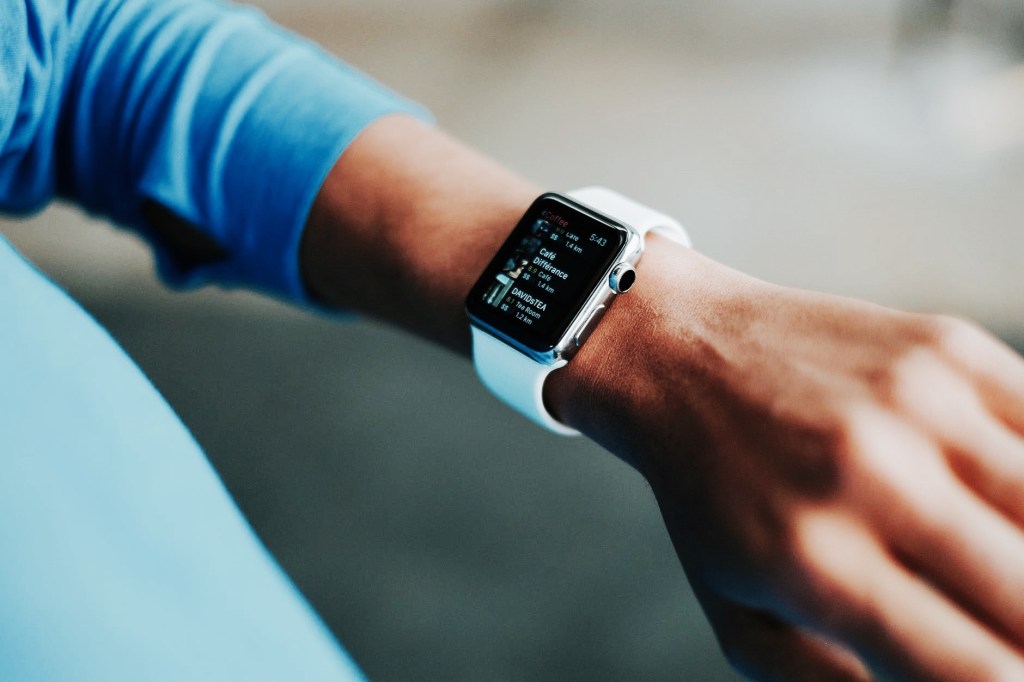
Do you wear a device to track your movement or heart rate? Or do you use an app on your phone? Perhaps you have a favorite watch for this purpose?
In a recent Wall Street Journal article, Julie Jargon reported on a systematic study published in The Lancet. It was found that
“When people wore wearables, they on average increased their daily step counts by 1,800—and boosted their daily walking time by 40 minutes. Fitness trackers are in fact effective in helping people lose weight, increase their aerobic activity and lower their blood pressure, the researchers concluded” (1).
Interestingly, in a recent study published in Journal of Medical Internet Research, Dr. Octavia Zahrt et al found that participants’ eating habits also were affected by tracking their step counts. The study’s participants were divided into four groups: those receiving trackers with accurate step counts, those receiving trackers with accurate step counts PLUS a meta-mindset intervention, those whose trackers had inflated step counts, or those whose trackers had deflated step counts (2).
“Participants receiving accurate step counts perceived their activity as more adequate and healthier, adopted a healthier diet, and experienced improved mental health…Participants exposed to deflated step counts perceived their activity as more inadequate; ate more unhealthily; and experienced more negative affects, reduced self-esteem and mental health, and increased blood pressure and heart rate…Inflated step counts did not change AAM [activity adequacy mindset] or most other outcomes (compared with accurate step counts)…Participants receiving the meta-mindset intervention experienced improved AAM affect, functional health, and self-reported physical activity (compared with participants receiving accurate step counts only)” (2).
The size of the global fitness tracker market is substantial: $45 billion US in 2021 and forecasted to grow to $192 billion US by 2030 (3).
I personally have two activity trackers (in addition to my phone and various apps), a Fitbit plus a Polar chest strap. I was told that the chest strap would be more accurate, which is important to me. However, I have found little difference between my Fitbit Inspire HR and my Polar H9 sensor. Perhaps this is because I have a stretchy aftermarket strap on my Fitbit. The original strap did not have a snug and comfortable fit. I do like having both and use them for different purposes.
Do you have a favorite wearable fitness tracker or watch? Please comment with your suggestions.
It seems that use of fitness trackers and wearables is here to stay. Hopefully they can make a difference in maintaining our healthy weight!
(1). https://www.wsj.com/tech/personal-tech/fitness-watch-apple-fitbit-health-family-7896d9d2
(2). https://www.jmir.org/2023/1/e40529
(3). https://straitsresearch.com/report/wearable-fitness-trackers-market
 Maintain Weight Loss