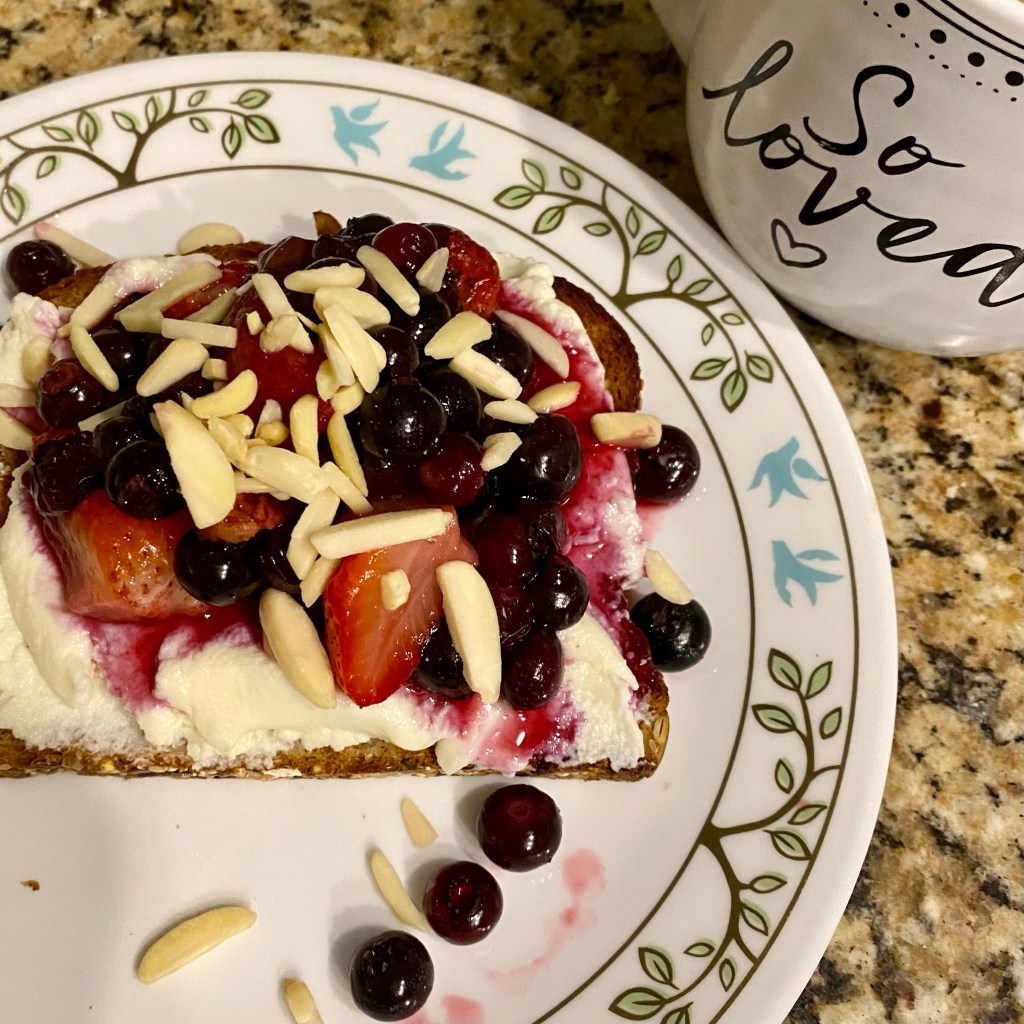
Food Prep: Breakfast Ideas

Whole wheat toast with low fat ricotta,
berries, and almonds from The Mayo Clinic Diet

We have long read that breakfast is the most important meal of the day. Today’s post will first explain the importance of breakfast and then follow up with meal prep ideas so that you will actually have time to eat it!

There is no shortage of studies which indicate an association between eating breakfast and improved health. In an analysis of 15 scientific studies, it was found that

regular breakfast habits (7 times/week) could significantly reduce the occurrence of cardiovascular and metabolic diseases, as well as such specific-diseases as T2DM [Type 2 Diabetes Mellitus], obesity, hypertension, strokes, hypercholesterolemia, MetS [Metabolic Syndrome], and abdominal obesity. Moreover, regular breakfast habits (7 times/week) yielded the maximum potential cardio-metabolic benefits, and even skipping breakfast once per week might reduce the benefits for T2DM, obesity, hypertension and strokes to a great extent. However, there was no significant correlation between regular breakfast habits and the occurrence of hypercholesterolemia (1).

Association and causation: You may notice that I point out associations between health variables, but try to avoid the the words causation or cause. It’s very easy to get excited about something like eating a healthy breakfast and then jump to the conclusion that it causes weight loss. In reality, many who are health conscious try to develop habits like eating good meals and snacks, exercising, and getting adequate sleep. For example, on average, it’s likely that those who exercise 150 or more minutes per week will weigh less. But does the exercise cause the healthier weight? Or does the fact that they are at a healthier weight facilitate/cause them to be more likely to exercise? If I don’t know the reason for the association, I won’t report it as a causation.

So if we accept the value of eating a nutritious breakfast, but we have a busy lifestyle with little free time in the mornings for preparing one, what can we do? That’s where advance meal prep comes in. I’ve created a list of links to helpful sites with recipes that you can prep in advance. I don’t have any relationship with these websites. If you have any suggestions for additional sites, please comment below and I can add them. Thank you!

Last on my list is a product I use, Oats Overnight. I’m deliberately not sharing an affiliate link here because I want you to know that I’m suggesting this company for the quality of their food, not for any financial incentive.

  • 20 Breakfast Meal Prep Ideas to Help You Save Time in the Morning: the recipes shared in this article in Men’s Health are the perfect compromise between decadent and healthy. Honestly, they all look like meals I’d love to try yet they also look healthy! (2)
  • 25 HEALTHY BREAKFAST MEAL PREP IDEAS FOR BUSY MORNINGS on the Gathering Dreams website is chock full of healthy and time saving ideas. It’s a well organized website with great photos of the recipes. (3)
  • Breakfast & Brunch on the Skinnytaste website cannot be missed! I think that you’ll find some great options in the 13 pages of healthy recipes, regardless of the plan you’re using. (4)
  • Breakfast Meal Prep Recipes from Fit Foodie Finds has 5 categories of recipes with a huge variety that will suit many types of diets and maintenance plans. They look delish, but I’ll warn you now that this website has lots of ads that really detract from the experience. (5)
  • I also wanted to share Oats Overnight with you. They are the ultimate in convenience! These yummy packets come in many flavors that you mix with milk (or mylk) and store in your refrigerator overnight. I choose to eat with a spoon (by preparing with a couple ounces less of milk) but many like drinking their oats. Each meal has 20 grams of protein, plus whatever your milk contains. They are available directly from the website (6) and Amazon. A slightly smaller portion with 15 grams of protein in a bottle (but also dry) can be found on Vitacost, in some Walmart stores, and likely other sources.

I hope that you found these ideas helpful and that in the morning, you’ll have time to enjoy that most important meal. Let’s get our day off to the right start – let’s maintain our healthy weight!

(1). https://www.ncbi.nlm.nih.gov/pmc/articles/PMC8568444/#__ffn_sectitle

(2). https://www.menshealth.com/nutrition/g30335571/breakfast-meal-prep-ideas/?utm_source=google&utm_medium=cpc&utm_campaign=arb_ga_mnh_md_pmx_us_urlx_18445115990&gclid=Cj0KCQiA6fafBhC1ARIsAIJjL8m6GICDum0QV74WT6E00vNWRNdEnorQLHbuKXlkicJDrncEEJxlEXEaAtzkEALw_wcB

(3). https://gatheringdreams.com/breakfast-meal-prep/

(4). https://www.skinnytaste.com/recipes/breakfast-brunch/

(5). https://fitfoodiefinds.com/meal-prep-recipes-breakfast/

(6). https://www.oatsovernight.com/

In the News: Erythritol Linked to Heart Attack, Stroke, Death

I noticed this news item in CNN Health and thought it was important to share it with you quickly. If you do an internet search, you will find that most news outlets have picked it up. Basically, a study published on February 27, 2023 in the journal Nature reports that people with the highest blood levels of erythritol have twice the risk of having a blood clot, stroke, or even dying as compared with those who have the lowest levels (1).

It’s important to note that this was a large study conducted over three years. The lead researcher, Dr. Stanley Hazen, is chair of the cardiovascular and metabolic sciences department at the Cleveland Clinic (1). So I think it’s fair to assume that it’s reputable.

“If your blood level of erythritol was in the top 25% compared to the bottom 25%, there was about a two-fold higher risk for heart attack and stroke. It’s on par with the strongest of cardiac risk factors, like diabetes,” Hazen said. 

Additional lab and animal research presented in the paper revealed that erythritol appeared to be causing blood platelets to clot more readily. Clots can break off and travel to the heart, triggering a heart attack, or to the brain, triggering a stroke (2).

Erythritol is a sugar alcohol that is used in many processed foods and diet drinks, as well as sugar substitutes Truvia and Splenda (3). It does occur in nature, but in much smaller quantities as compared to its highly concentrated use in the food industry. It’s very popular with Keto and low carb dieters, and of course those with diabetes.

Erythritol is certainly not the first artificial sweetener that has turned out to be dangerous to our health, and I doubt it will be the last. There have been many controversies about these sweeteners since they became popularized in the mid 20th century (4).

Even though erythritol does exist in nature, we use it in a very unnatural way! For example, there are 22 milligrams (0.005 of a teaspoon) of erythritol in a kg (2.2 pounds) of watermelon (5). In one single serving packet of Truvia, there are 2 grams (1/2 teaspoon) of erythritol (6). Though our bodies are adept at processing the infinitesimal amounts of this sugar alcohol found in natural foods, is it any surprise that there may be difficulties in handling substances thousands of times more potent? And how many packets of Truvia are added to a cup of coffee or tea, when the dieter knows they are calorie free?

As always, check with your doctor before making any significant changes to your diet. But it might be wise to look at other sweeteners to replace erythritol until additional research has been conducted. It is the recommendation of the study that more work needs to be done to assess the long term safety of erythritol (7).

We may find that it’s healthier to eat and drink the foods and beverages that nature has provided and our bodies are capable of properly using. Let’s stay safe and maintain our healthy weight!

(1). https://www.usatoday.com/story/news/health/2023/02/27/sugar-substitute-erythritol-increase-risk-stroke/11330213002/

(2). https://www.cnn.com/2023/02/27/health/zero-calorie-sweetener-heart-attack-stroke-wellness/index.html

(3). https://www.insider.com/low-calorie-sweetener-linked-to-heart-attack-and-stroke-risk-2023-2

(4). https://jamaicahospital.org/newsletter/history-of-artificial-sweetners/

(5). https://www.researchgate.net/publication/5482207_Analysis_of_erythritol_in_foods_by_polyclonal_antibody-based_indirect_competitive_ELISA

(6). https://www.truvia.com/products/truvia-packets

(7). https://www.nature.com/articles/s41591-023-02223-9.epdf?sharing_token=xl0fZ1Sr0DZQdRWgFEqgQNRgN0jAjWel9jnR3ZoTv0MTnVt_Yzm2YDkmKtSZJOysYZlROr0ymfAdj9yPHH8bMVWpKjhPzPeMT8zTG9DpNMmnfRfOqNqOH8PhwI2X9sxfHMa-Tpawl-dyIWq9WdTUO2lqDJWIHLoFK3aG5AGi1Ygg4C679gFN20UK_lQbztGNurleGqzhH6o-gRaytFtL7A%3D%3D&tracking_referrer=www.cnn.com

Basal Metabolic Rate / Resting Energy Expenditure – Calculations and Accuracy

Pictured above is a different BMR equation
than the one discussed in this post.

As you may know, I’ve been very fortunate to have had the opportunity to visit the Mayo Clinic Bariatric Center in Jacksonville, Florida. While there, they performed many tests, including my resting energy expenditure (REE) and basal metabolic rate (BMR). These terms are sometimes used interchangeably though there are slight differences. REE includes some low effort activities like eating and using the bathroom (1).

BMR is the amount of calories used while lying still but awake before rising in the morning (2).

Luckily for me, the higher result was from the more accurate test, True One Canopy indirect calorimetry. It found that my REE was 1,856 calories per day for a weight of 183 pounds. This fasting test measures the gasses exhaled while the patient breathes into a mask connected to the True One Canopy for 10 minutes.

Indirect calorimetry is the science associated with analysing metabolic processes. While direct calorimetry is achieved through direct measurement of total body heat produced, such as via a thermally sealed chamber, indirect calorimetry measures respiratory gases, i.e. oxygen (O2) and carbon dioxide (CO2) that are influenced by metabolism to meet energy requirements (4).

The other test used a top of the line Seca scale (3). It provided a lot of information, including a BMR. But devices like this do not have the accuracy of indirect calorimeter (5). Although the Seca scale has more data to improve the quality of its calculations, it’s still just that – a calculation.

The two tests were performed in a clinical setting, but I was told that one of the methods was much more accurate, so that’s the one they used when making dietary recommendations. This made me wonder about the accuracy of the more commonly used on-line calculators that many dieters use for planning purposes.

What exactly is the calculation for BMR? There are multiple methods, but one given on the verywellfit website is the Harris-Benedict Equation (6):

  • Men: BMR = 88.362 + (13.397 x weight in kg) + (4.799 x height in cm) – (5.677 x age in years)
  • Women: BMR = 447.593 + (9.247 x weight in kg) + (3.098 x height in cm) – (4.330 x age in years)

Testing this out, I inputted my old weight information and got a result of 1,478 using this BMR calculator: https://www.omnicalculator.com/health/bmr-harris-benedict-equation (The verywellfit calculator was down at the time of writing.) This is very similar to the output of the Seca scale.

I then visited 5 additional websites with similar results ranging from 1,428 to 1,480. See footnotes 7 – 11 if you’d like to give this a try. They did not specify which equation(s) were used.

As a point of interest, I had great difficulty finding an accurate REE calculator. One that I tested was off by 50%. (I’m able to confirm this because I know my REE from indirect calorimetry.) Upon further reading, I realized that this may be the nature of REE calculations. In a hospital study that used 15 different equations, “The percentage of accurate predicted REE was low in all equations, ranging from 8 to 49%” (12). For this reason, it may be better to use a BMR calculator.

What can account for the differences in calculated BMR and the actual calories burned at rest, in addition to age, sex, height, and weight? Body composition is a factor, with lean tissue like muscle using more calories than adipose tissue (2). Inherited factors can also play a role as well as can some health conditions.

If you are wondering how my Mayo dietitian used REE in my case, it was pretty simple. Basically, I was instructed to eat 1,800 calories (just under my REE) if I exercised. On days that I did not exercise, I was to cut this by about 400 calories. This resulted in a 500 calorie deficit daily or a pound loss weekly. That calculation held true until I reached my first goal weight. At this point to lose more weight I would have to exercise more. I’m unwilling to eat less!

Both BMR and REE can be used to calculate the calories needed for weight maintenance. Use these numbers as a baseline and then adjust with exercise or caloric changes to zero in on your exact needs. Check your scale to confirm your progress.

Interested in knowing how often to weigh in? See this post: https://lindawbrowning.com/2023/02/22/weighing-in-on-that/

What factors can we change so that our bodies burn more fuel at rest? The most obvious is to increase our muscle mass. Exercise is particularly helpful because it burns calories in the activity itself and then continues to give you the added boost of additional muscle mass. Adding strength building exercise to your plans will help you maintain a healthy weight.

(1). https://www.webmd.com/fitness-exercise/difference-between-bmr-and-rmr

(2). https://www.sciencedirect.com/topics/medicine-and-dentistry/basal-metabolic-rate

(3). https://www.indirectcalorimetry.net/understanding-indirect-calorimetry/

(4). https://www.seca.com/en_us/products/body-composition-analysis/seca-mbca-advantages/seca-mbca-514515.html

(5). https://www.sciencedirect.com/science/article/pii/S2667268521000048

(6). https://www.verywellfit.com/what-is-bmr-or-basal-metabolic-rate-3495380

(7). https://www.calculator.net/bmr-calculator.html?ctype=standard&cage=61&csex=f&cheightfeet=5&cheightinch=7&cpound=183&cheightmeter=180&ckg=60&cmop=0&coutunit=c&cformula=m&cfatpct=20&x=65&y=17

(8). https://www.active.com/fitness/calculators/bmr

(9). https://www.bodybuilding.com/fun/bmr_calculator.htm

(10). https://www.myfitnesspal.com/tools/bmr-calculator

(11). https://www.bmrcalculator.org/

(12). https://nutritionandmetabolism.biomedcentral.com/articles/10.1186/s12986-016-0145-3

Food Prep: The Complete Paleo Cookbook for Beginners

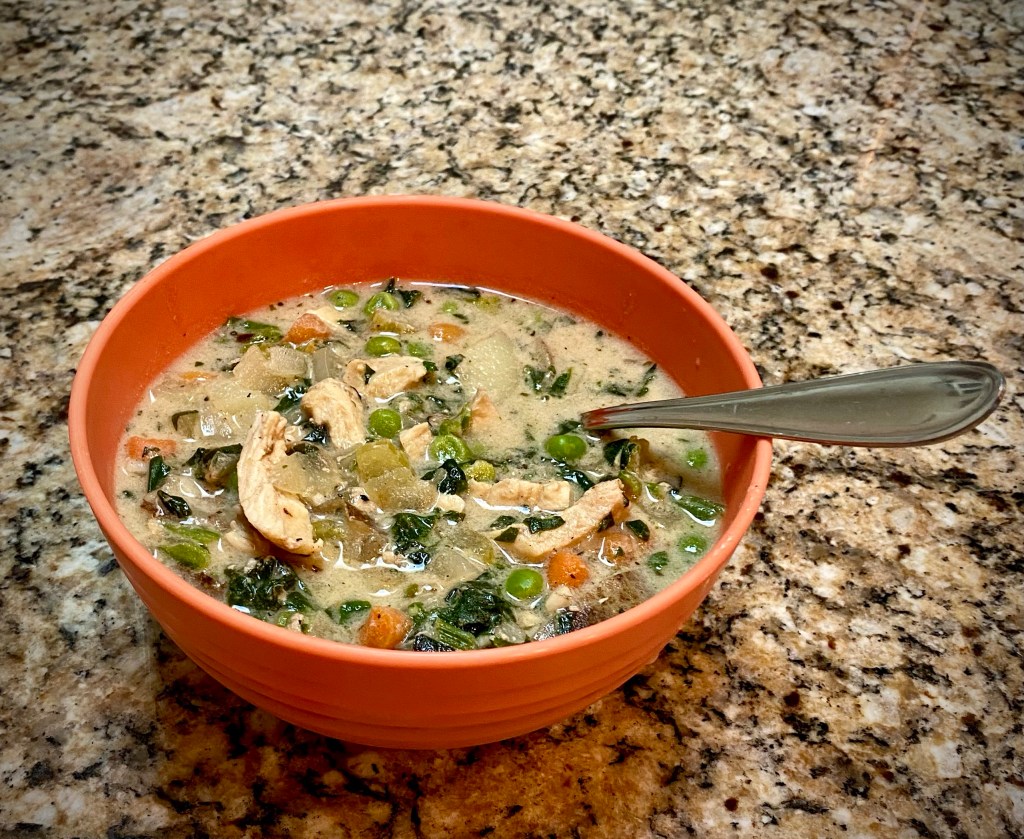
Chicken Potpie Soup

I’ve tried many diets, but must admit that paleo was not on my radar. I’m always willing to learn more, so I selected this book to review.

The goal of this diet is to reduce health problems by returning to the foods that our Paleolithic ancestors may have eaten. Fast foods, processed foods, refined grains, and vegetable oils are avoided. Beans and dairy are excluded as well as they can increase inflammation in some people (1). You would not consume most sugars, fruit juice, or any artificial sweeteners.

The authors state that the calories in a paleo diet are balanced in this way: 20 percent carbohydrates, 25 percent protein, and 55 percent fat. This is far more fat and much less carbohydrate than most diets we follow, unless you are on a low carb or keto diet.

After explaining what the paleo diet is, the authors outline the types of ingredients and cooking equipment. Two weeks of plans and shopping lists are given for each of these plans: Getting Started, Weight Loss, and Autoimmune Protocol.

There is a chapter of recipes in each of these categories: Breakfast and smoothies, Vegetables and side dishes, Seafood, Poultry, Beef, pork, and lamb, Snacks and desserts, and Homemade staples. That last chapter has recipes for grain free breads and various sauces.

Most of the recipes include photos. All give these nutrition facts: calories, total fat, protein, carbohydrates, and fiber. Unfortunately, they are missing sodium and cholesterol, which can be important for some of us.

I prepared Chicken Potpie Soup as I had most of the ingredients on hand. I substituted white potatoes for sweet potatoes. I didn’t agree with the cooking instructions for this recipe, which is pretty unusual for me. The trouble is that they only allowed 10 minutes for the carrots, potatoes, and celery to cook. I know from personal experience that these vegetables take significantly longer to soften. However, by adding them to the soup pot during an earlier step, the problem was solved. The soup was very good and I was surprised by how much we liked coconut milk in this recipe!

Because I feel that the recipe instructions were misleading, I would not recommend The Complete Paleo Cookbook for Beginners for beginning cooks. I know that sounds a bit strange given the title! But it probably is a great book for beginners at the paleo diet or others who want to experiment with new recipes designed to reduce inflammation.

Meal planning is associated with greater food variety and lower obesity rates (2). Let’s continue to explore new recipes to help us maintain our healthy weight.

(1). The Complete Paleo Cookbook for Beginners. Kinsey Jackson, Sally Johnson. 2022.

(2). https://www.ncbi.nlm.nih.gov/pmc/articles/PMC5288891/

Self Care: Mindfulness

Have you been seeing the term mindfulness more often lately? It’s not always associated with dieting, but it is often discussed in terms of health benefits. As it turns out, it can play a role in maintaining a healthy weight.

Sometimes mindfulness is coupled directly with food, as in mindful eating. In that case, it’s meant that while you’re eating, you should be focusing on and fully experiencing the act of eating. Don’t be distracted by television,video games, reading, or your phone. Although that’s a great practice, it’s not the main thrust of today’s post.

Let’s look at the general practice of mindfulness. How can we become more fully present, without the distractions of multitasking? And what can mindfulness do for us in maintaining a healthy weight?

“Mindfulness is about being in the moment,” says wellness and breast medicine specialist Roxanne B. Sukol, MD. “If you’re spending all your time worrying about the future or thinking about whether you should have done something differently in the past, it’s almost like you’re missing your life” (1).

There are many options for practicing mindfulness, and some are likely activities you are familiar with. When you engage in these activities, be truly present and aware of what is going on. Try to concentrate on your enjoyment and how you’re feeling.

Many of the ideas below were expanded upon a list of simple suggestions made by the Cleveland Clinic (1). Add some of your own by leaving a comment on this post. Thank you!

  • Get a massage, manicure, pedicure, facial – whatever soothes your soul.
  • Plant and care for a garden – whether that’s in containers in your home or in the ground outdoors.
  • Go for a walk, or better yet, a hike in a natural setting.
  • Get out on the water – rowing, kayaking, or fishing are good options.
  • Enjoy reading a new book – or even looking at a photo album or coffee table book.
  • Create your own art – whatever art form you feel drawn to.
  • Try a craft like knitting, embroidery, or crocheting – there are many videos available to help you learn.
  • Write something meaningful to you – whether that’s a journal, a letter, or a blog like this one.
  • Enjoy a cup of tea or mug of coffee – and I don’t mean your regular morning beverage – make it special.
  • Build something with your hands, whether it’s woodworking, sculpting, or even Lego blocks.
  • Become a nature watcher – birds, clouds, stars, leaves, waterfalls, whatever you can observe and appreciate.
  • Listen to music – whichever genre you love – but then also listen to a type of music you rarely or never hear for contrast.
  • Watch the sunrise or sunset and catch some healthy rays: https://lindawbrowning.com/2023/02/03/self-care-sunlight/

These go way beyond the typical deep breathing exercises you’ve likely read about. Meditation is another type of mindfulness activity.

But what difference does all this make? Why bother?

These activities can help you practice awareness of what you’re doing and how you’re feeling. It isn’t a stretch to see how this can be applied to our habits when eating. We can become more conscious of the present time and action. Here is a great video that explains mindfulness succinctly:

Are there actually studies that show the effectiveness of mindfulness practices? The answer is yes!

In a review of 19 scientific studies, “Significant weight loss was documented among participants in mindfulness interventions for 13 of the 19 studies identified for review” (3). Another study on mindfulness showed that participants who completed mindfulness training lost significantly more weight than a control group (4).

There are additional benefits that can indirectly affect weight. Mindfulness training has been found to be helpful for those with anxiety and mood disorders (5). Since obesity is associated with depression as well as anxiety, any improvements can have a positive impact for those who have been diagnosed with these conditions.

Please see your doctor if you feel these conditions might apply to you. Professional treatment is important for your health.

Please share any ideas for mindfulness activities that have worked for you. We can work better together ti maintain our healthy weight!

(1). https://health.clevelandclinic.org/what-is-mindfulness/

(2). https://greatergood.berkeley.edu/article/item/better_eating_through_mindfulness

(3). https://pubmed.ncbi.nlm.nih.gov/25490697/

(4). https://www.medicalnewstoday.com/articles/317547#Mindful-eating-in-online-weight-management-program

(5). https://pubmed.ncbi.nlm.nih.gov/22271843/

Food Prep: The WW Personal Points Cookbook

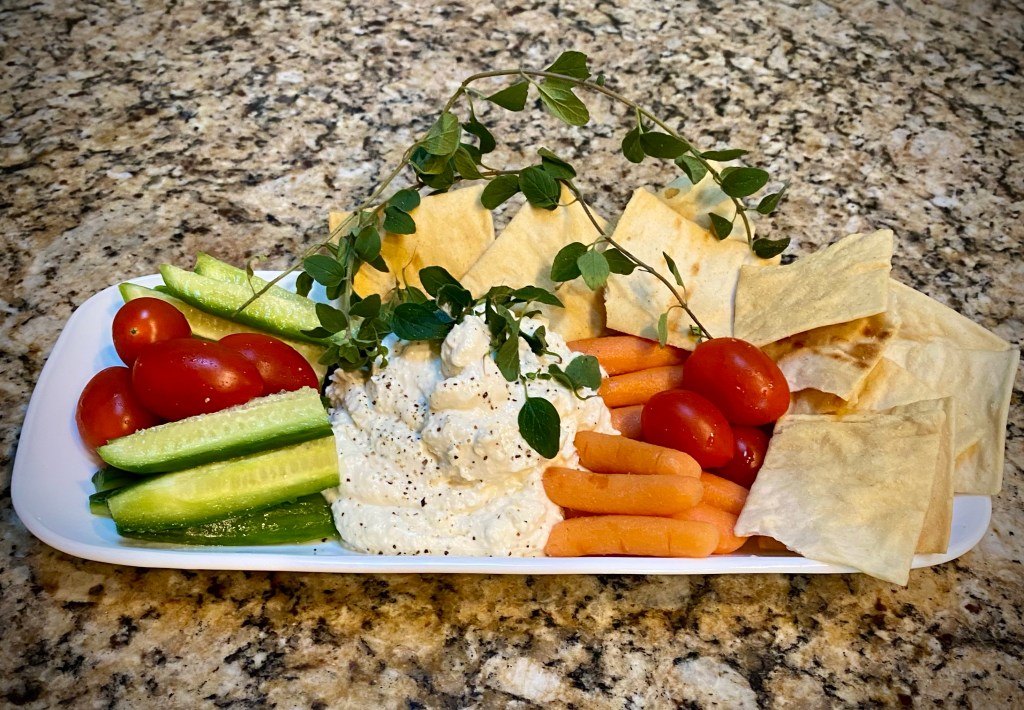
Whipped Feta Dip

This is a beautifully illustrated book with 125 recipes that conform to the Weight Watchers (WW) diet plan. But even if you are using a different program, the recipes can be a valuable addition to your diet. It’s not just about WW, but includes all sorts of cooking and nutritional information, much of it interspersed throughout the book.

For example, there are two full pages about eggs. Many terms are defined, such as cage-free, free-range, pasture-raised, and USDA organic. Methods of cooking are similarly explained: poach, fry, scramble, and hard boil. Helpful hints like how to tell if an egg is fresh and how to peel a boiled egg are also included (1).

The recipes are clear and very easy to follow. They include QR codes for those who are using the WW app for easy tracking. The points would be calculated for you automatically. The following data are given for each recipe: serving size, calories, total fat grams, saturated fat grams, sodium in milligrams, total carbohydrate grams, sugar grams, fiber grams, and protein grams (1).

The WW Personal Points Cookbook begins with a brief description of the plan and food prep tips. There are some great ideas for creating flavorful dishes that are healthy. Zero points foods are also explained, but you’d have to check to see how that might work with your WW plan (assuming you are using the Weight Watchers program). (Note that this is a cookbook – it does not go over the entire WW diet.)

Then the book goes into recipes in the following categories:

  • Breakfast
  • Simple Snacks
  • Vegetarian
  • Poultry
  • Seafood
  • Beef & Pork
  • Sweets

The final chapter is called Build a Meal. It includes very clever explanations of how to cook the building blocks of a meal, such as grains, sauces, proteins, and vegetables. You pick and choose among the options to create a fit that works for you and those you cook for. It helps to have the options all laid out for well balanced meals.

And speaking of well balanced, that’s what this book is designed for – balance. The ideas here will be best for those of us using plans like Weight Watchers, the Mayo Clinic Diet, the Mediterranean Diet, the DASH Diet, the MIND Diet, and any sort of generalized caloric deficit diet. There will be some ideas that are usable with other plans, but the focus of this book is a traditional, balanced diet.

I chose to prepare Whipped Feta Dip, which is such a useful and easily modified recipe. As you may have gathered, I exercise a lot so I’m always looking for ways to sneak more protein into my diet. For a 2 tablespoon serving of dip to have 4 grams of protein is amazing! With just 65 calories, I can see thinning this down and turning it into sauces and dressings as well. The protein is supplemented by adding tofu to the feta cheese. I omitted the olive oil, so it’s actually even lower in calories. Some may also be impressed by the 0 carb count. We gobbled this up with assorted veggies and store bought pita chips. (There is also a recipe for whole wheat pita chips included in this book.)

I’d recommend this book for anyone looking for healthy recipes, regardless of your plan. It’s ideal for balanced diets, but as you can see from my dip, many of the recipes can work for those limiting carbohydrates as well. Finding a variety of recipes that will work for you will make it easier to maintain a healthy weight.

(1). The WW Personal Points Cookbook. WW International. 2021.

Weighing In on That

How often should you weigh in to check your maintenance progress? Short answer: it depends on the individual. For the long answer, read below to find out what studies and experts suggest. But in the end, it still comes down to what you feel is best for you!

I weigh myself daily, though I’ve been told by friends that this is excessive, and I can see their point. There are so many factors that cause weight variation, especially for younger women. Still, I like to keep on top of things to see what is working and what isn’t.

I was kind of embarrassed by my daily weigh-ins until I came across a study which showed that for the weight loss stage, weighing daily results in greater weight loss (1). The scientists found that dieters who weighed-in daily had better compliance with their weight control behaviors (1). There are similar studies that show that weighing daily is correlated with the most success, followed by weekly weigh-ins (2).

Can excessive weigh-ins be a sign of an eating disorder (ED) or body dysmorphia? Yes and no. It is true that those suffering from EDs self-weigh quite often, and that they frequently keep these weigh-ins secret (3). However, just because you step on the scale frequently does not mean you have an ED. Self-weighing can be effective for those without EDs, but if you have been diagnosed with anorexia nervosa, bulimia nervosa, or binge eating disorder it should be avoided as it is associated with greater shape and weight concerns (2). Please see your doctor for further information on this topic.

For more on body dysmorphia, body positivity, and body neutrality, see this post: https://lindawbrowning.com/2023/02/20/body-dysmorphia-related-concerns/

So when is daily self weighing a good idea? Weighing yourself daily is appropriate if it does not add to your stress level. It appears to be effective at preventing age-related weight gain and correlates with losing weight and keeping it off as well (4).

For some people, weighing in less frequently, particularly at a health care provider, can actually cause more harmful behavior. This is because it places a lot of importance on one particular weigh-in. If you are in this category, you may engage in behavior like fasting or crash dieting just before a check-up (4).

But for others, stepping on the scale, even in your own home with no one watching, produces more stress. If it affects the mood of your entire day, you’d probably be better off skipping those daily weigh-ins.

It’s also important to remember that weight is just one component of health. It’s likely not the best one, even accounting for height differences. In fact, some advise to never weigh in but to use other objective goals like body (tape) measurements or body fat percentage (5).

Is there a final answer? Yes, whatever works best for you is the answer. This is your weight maintenance journey!

The key with weighing is consistency (6).

  • Weigh at the same time of day, preferably before eating or drinking, regardless of how often you step on the scale.
  • Weigh at the same type of clothing (preferably none at all).
  • Use the same scale and place it on a flat, hard surface.
  • Distribute your weight equally on both feet.
  • Remember that weight fluctuates so never go by a single reading, whether you’re weighing daily or less often.

For more on alternative measurements, please see this post: https://lindawbrowning.com/2023/02/16/body-measurements-waist-to-hip-ratios/

(1). https://www.ncbi.nlm.nih.gov/pmc/articles/PMC4380831/#__ffn_sectitle

(2). https://www.webmd.com/fitness-exercise/ss/slideshow-7-most-effective-exercises

(3). https://www.ncbi.nlm.nih.gov/pmc/articles/PMC5604338/

(4). https://www.health.com/weight-loss/how-often-should-you-weigh-yourself

(5). https://www.healthline.com/health/diet-and-weight-loss/how-often-should-i-weigh-myself#when-dieting

(6). https://www.livestrong.com/article/13768501-how-often-to-weigh-yourself/

How to Support Others on Their Weight Maintenance or Weight Loss Journeys

Today let’s talk about ways we can help others as we strive to maintain our healthy weight. So the focus will be on support for friends and family, whether we interact with them in person, or online in various groups and websites. And while we are helping others, we will be learning how to be more successful ourselves!

This information in this post does not apply to supporting those with eating disorders (ED). Since I’m not a medical professional, it’s definitely beyond the scope of my education or experience. Please work with your healthcare provider if someone close to you has an ED as it is a serious condition.

What To Do

  • Ask for permission before discussing their weight related plans – either directly or indirectly. If they don’t want to talk about this topic, let it go (1).
  • If they decline, let them know you care and will be there if they change their mind. Remember to express that care about them, not their diet (2).
  • Lead by example – you don’t need to worry about saying the wrong things if you demonstrate supportive actions like exercise and eating healthy foods (3).
  • Be the best cheerleader you can be and show your pride in their successes (2). Be aware that not everyone can accept compliments gracefully and don’t feel badly if their reaction is underwhelming.
  • Participate in their dietary and exercise changes by trying their foods or taking a walk with them (3).
  • Ask them how you can help out. If they would like, you can do their program with them. It’s more likely that they will succeed with a partner (1).
  • Celebrate with your friend or family member – of course non-food activities are best. Positive reinforcement doesn’t need to be edible (3).
  • Learn about the program they’ve chosen. You can support them more effectively this way, and you may find this helps your health too (2).
  • Focus on their improving health if they seem shy about their changing appearance. For more information on body positivity and body neutrality, take a look at this post: https://lindawbrowning.com/2023/02/20/body-dysmorphia-related-concerns/

What Not To Do

  • Don’t tempt them by offering “just a taste” of something you’re having if you know it’s not on their plan (2).
  • Don’t judge or be a food police officer (3).
  • You are not their coach or trainer – remember your role is to support. Do not attempt to control their eating or exercise behavior.
  • “Research has shown that a person’s chance of becoming obese increases by 57% if a close friend is obese, 40% if a sibling is obese, and 37% if a spouse is obese” (4). Try to do the best you can to be part of the solution rather than part of the problem.
  • Don’t joke about the situation (unless you are certain your friend or relative would view this as supportive). This could be embarrassing for them (3).
  • Don’t encourage old behaviors because you miss the carefree (fattening) days with your friend or relative (5). Change is challenging, but if you really care, you’ll want the best for their health.
  • Minimizing the importance of weight loss and maintenance is just wrong. Obesity can be a life-threatening disease and should be recognized as such (6).
  • Statements like, “ Why don’t you just eat less and exercise more?” are hurtful. Realize that if it were simple, we would not have a worldwide obesity problem.
  • Don’t abandon them or keep your distance because you’re uncertain of your role. Get on board to help ensure their success (7).

Read that last one again! Studies show that those who diet along with friends or family stay with their program longer and are more successful in maintaining their weight loss as well (7).

By forming strong relationships with the dieters you know, it is more likely that both of you will be able to maintain a healthy weight.

(1). https://www.everydayhealth.com/weight-pictures/the-dos-and-donts-of-talking-to-a-loved-one-about-weight-loss.aspx

(2). https://www.webmd.com/diet/obesity/features/10-ways-to-help-a-loved-one-lose-weight

(3). https://www.upmcmyhealthmatters.com/dos-and-donts-when-helping-someone-lose-weight/

(4). https://www.hsph.harvard.edu/news/hsph-in-the-news/friends-and-family-can-influence-your-weight/

(5). https://www.prevention.com/weight-loss/a20459548/weight-loss-sabotage-from-friends-and-family/

(6). https://www.conci.com/weight-loss-tips/support-from-family-and-friends-during-weight-loss-and-maintenance

(7). https://pubmed.ncbi.nlm.nih.gov/10028217/

Body Dysmorphia & Other Related Concerns

Let’s learn about body image issues that can keep us from maintaining a healthy weight. If you feel that the descriptions below sound like the struggles you are dealing with, I hope you’ll talk about it with a medical provider. You don’t need to be alone in this!

There are 6 common eating disorders according to Healthline. They are: anorexia nervosa, bulimia nervosa, binge eating disorder, pica, rumination disorder, and avoidant/restrictive eating disorder. These are serious conditions that are far beyond the scope of my blog. If you feel that any may apply to you, please see your doctor. Early diagnosis and treatment are important for your health. Read more here: https://www.healthline.com/nutrition/common-eating-disorders

Let’s go straight to the source, the Body Dysmorphic Disorder Foundation, to learn how to differentiate between body dysmorphia and other similar conditions and terms:

The main difference between eating disorders and Body Dysmorphic Disorder (BDD) is [that] someone with an eating disorder is worried about their body weight and shape, which leads to behaviours that are aimed at trying to lose or control weight…BDD tends to be focused on specific areas of concern and restricted eating may be employed to try and alter those perceived flaws.

A distorted body image is a feature of both BDD and eating disorders, which also share many other symptoms, such as low self-esteem (1).

So an important difference between BDD and eating disorders is that in general those with BDD are concerned about perceived flaws with specific body parts, not the shape of their entire body (2). However, it is possible to have BDD as well as an eating disorder or a preoccupation with weight.

The term gender dysphoria is sometimes confused with BDD (3). “Gender dysphoria means someone feels the body they were born into doesn’t reflect their true self or who they are or identify with in terms of their gender” (3). It’s possible to have both disorders, even at the same time. A good example of this is when someone with gender dysphoria becomes overly concerned about breast size.

It appears that being dissatisfied with your body can become a gateway to a variety of disorders (4). Because of the seriousness of these health conditions, some have suggested that we improve our attitudes about our bodies by adopting the approach of body positivity.

Body positivity emphasizes the beauty of all bodies, regardless of shape, size, color, or gender. If we can feel good about how we look, then we are less likely to have anxious or obsessive thoughts about our appearance (5).

Body positivity sounds like the perfect attitude on the surface, but for some people, it rings hollow. Even though it seems like it’s inclusive, it tends to portray “young, white, conventionally attractive, non-disabled, cisgender females. People of other ethnicities, males, people from LGBTQIA+ communities, and older adults do not have adequate representation” (5).

The goal of body neutrality is an alternative attitude we can adopt. Its emphasis is not on appearance at all. Instead, body neutrality focuses of the amazing functions of our body rather than how our bodies look (5).

To me, body neutrality is a healthier outlook. If we place our emphasis on the function of our physical bodies, we can step away from social media bias and the absurdly edited perfectionist images that surround us. (Yes, you can see how I really feel by that last statement!)

The National Eating Disorders Association has a 5 step plan to enable us to move towards body neutrality:

  • Call a truce on the war with your body. You can’t hate yourself happy, successful, thin or anything else. Step away from living in the body hatred camp.
  • Start a daily body appreciation practice. Write down 5 things every day that your body can do.
  • Counteract your negative self-talk (your inner bully) with some body neutral phrases like thanking your body for taking care of you today and understanding that your weight does not define your worth.
  • Focus on your strengths. What are your unique talents, and what are you good at? What do others like about you?
  • Clean up your social media feeds. If there are people or sites that make you feel bad about yourself, or that you compare yourself with, delete them. Follow feel-good feeds (6).

How do you feel about body positivity vs. body neutrality? Will you make it a practice to concentrate on the positive aspects of your body? Let’s continue to learn and grow as we maintain our healthy weight!

If you are interested in more about media and distorted body image, you might like to read one of my first blog posts here: https://lindawbrowning.com/2022/12/09/perspectives-on-appearance/

(1). https://bddfoundation.org/information/bdd-related-conditions/eating-disorders/

(2). https://www.webmd.com/mental-health/mental-health-body-dysmorphic-disorder

(3). https://www.talkspace.com/blog/body-dysphoria-vs-dysmorphia/

(4). https://www.verywellmind.com/body-image-and-eating-disorders-4149424

(5). https://www.medicalnewstoday.com/articles/body-positivity#what-is-body-positivity

(6). https://www.nationaleatingdisorders.org/blog/5-steps-body-neutrality

Food Prep: The Essential Vegan Keto Cookbook

Spiral Squash “Pasta” Salad

I haven’t tried the keto diet, but I know that many people find that it’s successful for them. This cookbook keeps the typically high cholesterol level of ketogenic diets down by its heavy use of vegetables and healthy fats. Still, it’s best to speak to your doctor before changing your diet.

The Essential Vegan Keto Cookbook by the editors of Rodale Books starts off with an explanation of the keto diet. The unique part of a vegan keto plan is that your fat and protein will be from plant based sources instead of the traditional meat, eggs, and dairy (animal) based sources of the traditional keto plan. That’s a big bonus for those of us who struggle with high cholesterol. The vegan focus would also be of interest for those concerned with the environmental impact of consuming large quantities of animal products or the plight of livestock used for agricultural purposes.

The book suggests that there are many health advantages to following a keto diet, and it also lists a few disadvantages (1). The benefits include: increasing energy, curbing diabetes, suppressing appetite, and reducing acid reflux. Some of the negatives include: high sodium consumption (and its effects on other conditions like hypertension), bowel irregularity, “keto flu” or various flu-like symptoms that occur at the early stages of the diet, and bad breath (also worse during the early stages of a low carb diet).

This book has a helpful list of foods to avoid and also foods to enjoy. But, be aware that some of these foods are high in calories. You would not want to include too many of them in a more traditional, calorie deficit type of eating plan. You can easily skip those and concentrate on the lower calorie options or simply omit some of the fat in the recipes as I did when I prepared the Spiral Squash “Pasta” Salad.

The 65 recipes included in the book are organized into these categories: Smoothies & Breakfasts, Soups & Salads, Entrées, Desserts, and Snacks. Many feature attractive photos. Each contains the following nutritional facts: calories, fat, protein, and “net carbs”.

There is some controversy over the term “net carb”. This is because there is no standard for the phrase. Unscrupulous advertisers can twist the meaning to promote their products. But in general, net carbs are the result of subtracting the grams of fiber and sugar alcohols from the grams of total carbohydrates. The argument is that these carbs (sugar alcohol and fiber) have little impact on blood sugar, being low on the glycemic index. However, some experts feel that if you consume large quantities of sugar alcohols, the effects many not be desirable (2). This can include digestive upset and also the possibility of raising blood sugar in some individuals.

The recipes are well explained and not overly complex. Some of the ingredients may be a little hard to come by, as they are specific to vegan and/or keto diets. Examples of less common ingredients include ground golden flax seeds, psyllium husk powder, liquid stevia, nutritional yeast, vegan cream cheese, glucomannan powder, vegan sour cream, and liquid smoke. It would be simple to make substitutions for many of these – I wouldn’t let it hold you back from trying this cookbook.

The recipe that I chose, Spiral Squash “Pasta” Salad, had common ingredients. I substituted almonds in place of macadamia nuts. I also cut the olive oil and avocado in half to save on calories. I find all these fats unnecessary since I am not on a keto diet. The resulting dish is as attractive as it is delicious! It’s full of healthy veggies and the use of tofu in the dressing works well in terms of texture and protein content.

We can use many kinds of recipes to maintain our weight. I think it’s a great idea to borrow ideas from many plans as it keeps our meals interesting and fresh. Remember this whenever you feel like you’re in a rut. Variety will work best for us because this is a long journey as we seek to improve our health!

(1). The Essential Vegan Keto Cookbook; 65 Healthy & Delicious Plant-Based Ketogenic Recipes. The Editors of Rodale Books. 2018.

(2). https://www.webmd.com/women/features/net-carb-debate

In the News: Childhood and Adolescent Obesity Guidelines

How do you feel about offering prescription diet medications to 12 year olds? Permanent weight loss surgery to a 13 year old? Weight loss counseling to a toddler?

Yes, I’ve taken the obesity interventions recommended by the American Academy of Pediatricians (AAP) to their extreme conclusions, but those really are are part of their guidelines. Read on to see both sides of this important issue. Or, look at the AAP’s 100 page report here: https://publications.aap.org/pediatrics/article/151/2/e2022060640/190443/Clinical-Practice-Guideline-for-the-Evaluation-and?autologincheck=redirected

Against These Interventions?

There certainly are cases of morbid obesity in adolescents that should be addressed promptly. But these interventions – other than counseling – seem to be extreme and carry the possibility of harm. We have seen so much abuse of diet drugs and surgeries over the years – do we want to risk our children’s health and psyches with practices that have been rarely used with this age category? What will the long term use of diet medications be on a growing youth? Could bariatric surgery have unintentional consequences on the development of a young person? Are these interventions more likely to contribute to eating disorders, as some specialists in the field predict (1)?

This just feels wrong, as we already know that these interventions often aren’t successful in the long term for adults. But on the other hand, doing nothing to address adolescent obesity also carries risk. And the scope of this problem is astounding – 1 in 5 children in the United States is obese based upon BMI (2).

For more information about BMI (and its flaws as an obesity standard) see my post BMI, Waist Circumference & Waist-to-Hip Ratios here: https://lindawbrowning.com/2023/02/16/body-measurements-waist-to-hip-ratios/

The Forbes article, “New Guidelines On Childhood Obesity Are Met With Some Resistance” by Nina Shapiro makes some excellent points. “Increased physical activity, stress management and better education should obviate the need for medications or surgery” (3). Yet, even though there has been more education in these areas, overweight and obesity numbers continue to rise. So what is the solution?

Against Watchful Waiting?

With 14.4 million children and adolescents living with obesity in the United States (4), we can see that the old philosophy of “watchful waiting” hasn’t been particularly effective. The AAP has finally addressed this serious problem in their Clinical Practice Guideline for the Evaluation and Treatment of Children and Adolescents With Obesity which includes supplemental technical reports supporting their diagnostic and treatment recommendations.

It’s likely that most of us are aware that obesity is actually classified as a disease. Is there any other disease where doctors just say something like, “Oh, I see that you have a disease that over time will greatly decrease your quality of life and likely shorten your lifespan. Let’s just sit back and see how it progresses”? I question the appropriateness of the guideline – but I’m glad that obesity in children and adolescents is getting the attention it deserves.

It’s important to point out that the AAP’s guidance for interventions is based upon the severity of the disease (5). It’s easy to create sensational headlines that are misleading. Yes, in some cases surgery can be discussed with a young teen, but this is only in severe cases, and after many diagnostic tests have been evaluated.

In an interview of Dr. Raquel Hernandez, Medical Director at Johns Hopkins All Children’s Healthy Weight Initiative, it was explained that:

“[Treatment] choices very much match severity. For patients who do not have health-related issues from their weight, or who are low severity, medication and surgery probably wouldn’t be the immediate recommendation. But for children who start to meet the criteria of what we call class two and class three levels of obesity, those choices actually become more a part of the treatment plan” (6).


With such an important and controversial topic, it’s very likely that our opinions will differ on how to find solutions. Perhaps you have a personal experience that has informed your ideas about the treatment of childhood and adolescent obesity.

Share your thoughts in the comments below. Let’s continue to learn from others about these issues in the news.

(1). https://www.npr.org/2023/02/15/1155521908/eating-disorder-obesity-guidance-risk-weight-loss

(2). https://www.nytimes.com/2023/01/20/well/family/childhood-obesity-guidelines.html

(3). https://www.forbes.com/sites/ninashapiro/2023/01/17/new-guidelines-on-childhood-obesity-are-met-with-some-resistance/?sh=63936f841a5b

(4). https://www.aap.org/en/news-room/news-releases/aap/2022/american-academy-of-pediatrics-issues-its-first-comprehensive-guideline-on-evaluating-treating-children-and-adolescents-with-obesity/

(5). https://publications.aap.org/pediatrics/article/151/2/e2022060641/190440/Executive-Summary-Clinical-Practice-Guideline-for

(6). https://www.abcactionnews.com/news/region-hillsborough/new-study-shows-childhood-obesity-requires-early-and-aggressive-treatment-like-surgery-or-medication?_amp=true

Coursework: Hacking Exercise For Health, Unit 1

I’ve decided to take another free class through Coursera. It’s an amazing opportunity to learn from knowledgeable professors at reputable universities at no cost to you, unless you need a certificate. This one is through McMaster University in Ontario, Canada and is called Hacking Exercise For Health: The Surprising New Science of Fitness (1).

Before embarking on any new fitness activity, check with your medical provider to see if it’s safe for you! This course includes some fitness activities that could cause injury.

Interested in my prior posts on Coursera? Three posts summarize the course, Understanding Obesity: https://lindawbrowning.com/2023/01/02/coursework-understanding-obesity/ , https://lindawbrowning.com/2023/01/19/coursework-understanding-obesity-unit-2-of-3/ , and https://lindawbrowning.com/2023/01/24/coursework-understanding-obesity-unit-3-of-3/ .

Hacking for this course means that we will apply expert, inside knowledge to solve a problem, fitness in this case. Two types of exercise are addressed, strength building/resistance training and cardiorespiratory exercise. I’m sure that you’re already familiar with these terms, but basically, the instructors will be teaching us time saving techniques to improve our strength and cardio fitness.

Speaking of our instructors, they are Dr. Martin Gibala and Dr. Stuart Phillips, both kinesiology professors. They are well qualified and also quite personable. I think you’d enjoy watching their course videos – very upbeat and positive professors who know how to explain difficult concepts. They stop to check your understanding and also to give outside assignments.

I’m going to share three of those outside assignments with you here. They are fitness assessments to try if you are able. Note that I am not able or willing to complete all of them as they hurt my joints. But I think we can all do the first assessment. Don’t push yourself to complete the assessments as injury could be the result!

The instructors tell us that through advances in science and many medical studies, we will be able to learn some fitness shortcuts. They are presented in greater depth later in the course. However, they explain that by exercising with greater intensity, but for a shorter duration, we can achieve excellent results in both cardiorespiratory and musculoskeletal fitness. You get the “biggest bang for your buck,” or the most significant results, in the first part of your exercise session. Being physically active – even for a short time – is what matters most (1).

Since this class is free on Coursera, might you consider taking a look? They have some great offerings that can go a long way in helping us maintain our healthy weight!

(1). https://www.coursera.org/learn/hacking-exercise-health

BMI, Waist Circumference & Waist-to-Hip Ratios

Many experts agree that weight and body mass index (BMI) are insufficient to assess our health. This is because exercise, which is clearly healthy, builds muscle mass. Muscle is significantly more dense than fat, so it is possible to gain weight and actually be thinner and healthier than you were at a lower weight. BMI is worth looking at, but there is so much more!

Here’s a handy BMI calculator: https://calculator-converter.com/bmi-calculator.htm I like this one as it accepts decimals for height and weight.

Even though we normally think of a healthy BMI as being 18-25, this is not the best range for those over 65. I was informed of this when I saw a bariatrician at The Mayo Clinic (although I’m not quite at that age yet). Numerous studies show that for older people, a BMI of 25-27 is healthier (1). Of course there are different standards for children and teens as well.

Where your body stores fat is also crucial to heart health and diabetes risk. According to the American Heart Association, “Women with a waist size greater than 35 inches and men with a waist larger than 40 inches are at higher risk for heart disease and Type 2 diabetes, according to the National Heart, Lung, and Blood Institute” (2).

In addition, a very large and long term study found that waist circumference was found to have a high correlation with risks of many types of cancer (3). Given that this simple measure is so valuable in determining our health, and the risk for most causes of death, it’s an important consideration.

But there is a flaw with using waist measurement alone. It does not account for differences in height. Someone who is just 5 feet tall with a waist circumference of 35 inches is not in the same shape as someone who is 6 feet tall with that 35 inch waist circumference. There are the overall proportions of the body to consider.

The waist-to-hip ratio puts the waist measurement in a better perspective. According to WebMD, this ratio gives a clearer picture of your health than weight or BMI (4). It’s also an easy calculation. Simply measure your waist at its smallest point, likely around your belly button. Then measure your hips at their widest point. Finally, use an ordinary calculator to divide your waist measurement by your hip measurement.

There are slightly different ideas on what waist-to-hip ratios are healthy. The World Health Organization’s standard is 0.90 or less for men and 0.85 or less for women. Anything over 1.0 is considered to be dangerous for your health (3). The University of Alabama suggests looser standards of 0.99 or lower for men and 0.90 for women (5). However, if you read more about the study that gives this guidance, you will see that it was done on people aged 75 and older (6). So unless you are 75 or older, the lower numbers would apply to you.

There are other factors that make this ratio less than ideal for some individuals (7). These include height, general body size, and thigh circumference, but information was not given on how to include them.

Here’s a waist-to-hip calculator to try: https://www.healthcalculators.org/calculators/waist_hip.asp

As you may have seen, there is likely no perfect single measure that works for all of us. A body fat percentage could be helpful, but most of us don’t have the proper equipment for this. Perhaps we can consider using a variety of measurements. But, that can become burdensome.

An accurate assessment is more complex than these numbers or even looking at the standards which medical best practices recommend. Although they are the baselines for good health, there can be other considerations. Do you feel like you’re at your best? Do you have the energy to do your work or enjoy your hobbies? When you look in a mirror, do you feel confident? And if your answers are no, do you feel that you can move in the right direction? Some things to think about as we move forward to maintain our healthy weight!

(1). https://www.verywellhealth.com/healthy-weight-and-bmi-range-for-older-adults-2223592

(2). https://www.heart.org/en/news/2019/03/19/waist-size-predicts-heart-attacks-better-than-bmi-especially-in-women

(3). https://bmcmedicine.biomedcentral.com/articles/10.1186/s12916-020-01877-3

(4). https://www.webmd.com/fitness-exercise/what-is-waist-to-hip-ratio

(5). https://www.uab.edu/shp/nutritiontrends/nutrition-know-how/weight-control/waist-to-hip-ratio

(6). https://pubmed.ncbi.nlm.nih.gov/16895897/

(7). https://www.tandfonline.com/doi/abs/10.1080/03014460.2020.1820079

Exercise: Tai Chi

I recently took my first Tai chi class after reading about its many benefits. I was looking for improved balance but learned much more.

Read about other exercises to improve your balance here: https://lindawbrowning.com/2023/02/10/exercise-keeping-balanced/

Tai chi is a traditional Chinese exercise based on the martial arts (1). Its slow breathing and pacing are reminiscent of yoga. In my area, Tai chi is frequently taught at martial arts and yoga studios. Either can be a good choice, depending upon the direction you’d like to take your Tai chi practice. Watching videos is also a great option that will save you money, but it can’t give you individualized corrections on form.

There are many benefits to adding Tai chi to your exercise or self care routines. I’ve created the partial list below, but you may be aware of more.

Tai chi:

  • Has been found to be even more effective in reducing abdominal fat than a combination of weight training and aerobics in a nine month study. Participants’ waist measurements were compared to a control group and it was found that theirs were reduced “by 0.7 inches more with tai chi, and 0.5 inches more with brisk walking and strength training” (2). It’s important to note that the study subjects were over age 50.
  • May help with mood, anxiety, and depression, though further study is needed to confirm this (4).
  • Is an excellent workout, strengthening “both the lower and upper extremities and also the core muscles of the back and abdomen” (3). It also improves flexibility and balance. “Proprioception — the ability to sense the position of one’s body in space — declines with age. Tai chi helps train this sense, which is a function of sensory neurons in the inner ear and stretch receptors in the muscles and ligaments” (3).
  • Has been shown to improve sleep quality and anxiety in younger (18-40) adults (5).
  • May improve cognition for those with minor dementia. Tai chi “training significantly improved memory and the mental switching component of executive function in older adults with a-MCI [amnesiac mild cognitive impairment]” (6).
  • Could reduce the fear of and risk of falling in older adults if it is practiced for four and eight weeks, respectively (7).
  • Improves symptoms or helps in coping with several diseases, including fibromyalgia, chronic obstructive pulmonary disease (COPD), Parkinson’s, and arthritis (8).
  • Aids in the recovery of breast cancer (9). I personally don’t think it’s a stretch that it could be helpful for all cancer survivors and thrivers.

Might you consider adding Tai chi to either your exercise of self-care routines? There are many videos to try if classes don’t work out for you. Why not try to see if it can help us maintain our healthy weight?

(1). https://www.nccih.nih.gov/health/tai-chi-what-you-need-to-know

(2). https://www.webmd.com/fitness-exercise/news/20210602/tai-chi-as-good-as-working-out-to-shrink-waistlines

(3). https://www.health.harvard.edu/staying-healthy/the-health-benefits-of-tai-chi

(4). https://www.researchgate.net/publication/321299648_Qigong_and_Tai-Chi_for_Mood_Regulation

(5). https://www.ncbi.nlm.nih.gov/pmc/articles/PMC5118018/

(6). https://journals.sagepub.com/doi/10.1177/1545968317753682

(7). https://www.ncbi.nlm.nih.gov/pmc/articles/PMC5857038/

(8). https://www.healthline.com/health/tai-chi-benefits#improves-cognition

(9). https://www.ncbi.nlm.nih.gov/pmc/articles/PMC3927648/

Sick or Injured…Now What?

This post is not intended as medical advice. It does contain common sense ideas for getting back on track with your diet and exercise. As usual, the suggestions are from reputable sources with footnotes provided. Check in with your medical provider if you are feeling sick or have sustained an injury.

How to stay on track when you’re sidelined? When you get sick or injured – and this is inevitable – what can you do to get back on course? When should you return to your exercise program? How can you recover faster?

So many questions – and lots of answers too. Let’s start by dividing this into two categories, diet and exercise. Read below for ideas, but be cautious with your health!

The right choices for you may depend on whether you’re recovering from an illness or an injury, as well as the severity of your health issue. Is this a short term inconvenience like a cold, or a chronic concern like arthritis? It is always best to check with your healthcare provider before you make any changes in your diet or exercise plans.

Dietary Helps

It can be difficult to stay on track with your eating when you don’t feel well. It is so easy to turn to comfort or fast foods at a time like this! Although that may not pose a problem for a brief time, try to get back to healthy eating as soon as you are able. Here are some ideas that may help:

  • Consider having healthy foods or groceries delivered to your door if you aren’t feeling well enough to take on shopping and cooking.
  • Order convenience foods like pre-chopped fruits and veggies. Rotisserie chicken does contain a lot of added sodium, but you can cut fats and salt by discarding the skin.
  • Many grocery stores and delis have great salads and soups that can work well for you. Try to avoid cream based soups and heavy dressings.
  • Leafy greens are an excellent source of vitamins and minerals that are known to have anti inflammatory and immune supportive properties (1). Most fruits and vegetables can help in this same way.
  • Eggs and other healthy protein sources can help to heal your body after surgery (1).
  • Drink plenty of fluids when you are sick. This is also important for wound healing (1).
  • If you find that you’re gaining weight, try to slightly reduce portion size. It’s easier to gain weight when you become inactive due to illness or injury.
  • If you’re losing (unintentionally), try eating more often and check in with your doctor (2). Unintentional weight loss can be concerning.
  • Look for foods fortified with vitamin D or get some extra morning sun exposure. “Vitamin D is not naturally found in many foods, but it’s important to the immune system” (3).

For more on the healthy effects of morning sun, take a look at this post: https://lindawbrowning.com/2023/02/03/self-care-sunlight/

Exercise Helps

Let’s start off by recognizing that rest and sleep are so important to your recovery! It can be difficult to sleep when you have uncomfortable symptoms, but it can help bolster your immune system and repair processes (1).

Don’t overdo exercise during your illness or recovery. You need time to heal!

  • Ease back slowly into exercise. Your energy level won’t be as high right now (4). A little light cardio is a good starting point (5).
  • If you are running a fever, do not exercise. Your energy is needed by your immune system at this time to fight your infection (5).
  • It’s recommended that a reduction in your exercise program should last 2-3 days for every day of sickness (6). So if you were sick for 3 days, ease up on your workout for 6-9 days.
  • Working out “too hard and fast only sets you up for injury and could compromise your immune system enough to make you sick again” (7).
  • If your illness or injury has kept you off your feet for a long period, be particularly patient with your now weakened body. “Your underused muscles will get sore a lot quicker than you think, and if you work them too hard, you’ll risk a strain, sprain, or tear” (8).
  • Pay attention to your body’s signals. If you feel fatigued the day after a workout, take things easier next time (8).
  • Try a different activity – cross-training can help prevent further injuries (9).

Let’s remember that this is the journey of a lifetime, so we can’t let these problems derail us long term. Do the best you can to recover but don’t stress – progress over perfection!

(1). https://www.healthline.com/nutrition/foods-that-help-you-heal

(2). https://abuhb.nhs.wales/files/recovering-from-illness-assets/tips-to-help-recovery-food-nutrition-pdf/

(3). https://www.abbott.com/corpnewsroom/nutrition-health-and-wellness/5-immune-boosting-foods-to-eat-after-illness.html

(4). https://blog.fitbit.com/bounce-back-post-illness/

(5). https://www.shape.com/fitness/tips/how-to-exercise-after-being-sick

(6). https://www.livestrong.com/article/504794-getting-back-to-the-gym-after-being-sick/

(7). https://health.usnews.com/health-news/blogs/eat-run/articles/2017-03-16/how-soon-can-you-get-back-to-exercise-after-being-sick

(8). https://www.mensjournal.com/health-fitness/bounce-back-faster-exercising-after-youre-sick/amp/

(9). https://www.healthline.com/health-news/how-to-ease-back-into-exercise-safely-after-a-long-break#Getting-back-to-exercise-safely

Food Prep: Valentine’s Day with The New Mayo Clinic Cookbook

Almond and Apricot Biscotti
Braised Chicken with Mushrooms and Onions

Valentine’s Day is another holiday that we tend to associate with decadent foods. Are you thinking of chocolates or cheesecakes? Maybe a big steak dinner or lobster tails dipped in lemon and butter? Sorry, but we are not going there! Instead, let’s use this day to try out another cookbook.

There are at least three different editions of The New Mayo Clinic Cookbook: Eating Well for Better Health. Don’t make the same mistake that I did and buy all three thinking that they are different books! The “Concise Edition” is smaller in dimensions and doesn’t include all of the recipes, but the first and second editions seem identical. Winner of the James Beard Foundation Book Award in 2005, these books still have a lot to offer us.

At the time of writing, used copies of these books start at just $6 on Amazon, so it’s not much of an investment.

The books start off with a guide to healthy eating, but quickly launch into the delicious recipes. Most of the recipes include beautiful photography as well as clear instructions and the following nutrition facts: pyramid (food group) servings, calories, protein, carbohydrates, total fat, saturated fat, monounsaturated fat, cholesterol, sodium, and fiber. Unfortunately, there is no information on sugars specifically.

These cookbooks include the following chapters: vegetables, fruits, salads, soups, pasta & grains, beans & legumes, fish & shellfish, poultry & meat, and desserts & drinks. There are creative choices for each section and these books are at a good caloric level for those in both the diet and maintenance phases. For example, in the meat & poultry chapter, most main dishes are about 300 calories, with just one over 400 calories, and several around 200 calories. It would be easy to add a couple of sides for a total under 500 calories.

I chose two recipes to try, one dessert and one main dish. Braised Chicken with Mushrooms and Pearl Onions is not found in the concise version of the cookbook, so if you’d like to try this one, be sure to get the first or second edition of The New Mayo Clinic Cookbook. Note that since I didn’t have pearl onions, I substituted chopped onions. I also used chicken breasts – omitting the dark meat described in the recipe. This is a very tasty dish, and with only 300 calories and 34 grams of protein, it’s a good option for both weight loss and maintenance.

The Almond and Apricot Biscotti are amazing! These twice baked cookies have only 79 calories each, and the size pictured was made exactly as directed in the recipe. Really an excellent biscotti for the calorie level.

I’d recommend the first or second edition of The New Mayo Clinic Cookbook for anyone who is watching their weight but is not concerned that the grams of sugar data isn’t included. Skip the Concise Edition as quite a few recipes are missing, though it is a small and attractive book.

In the News: Maintenance After Stopping Ozempic and Other Anti-Obesity Medications

Preface

Note: There is a lot of personal history in this post. If you want to get straight to the facts, skip the following paragraphs in blue and start with The Struggle Is Real.

As you may know, when I began my last diet, I went to a Bariatric Center at The Mayo Clinic in hopes of getting started on Wegovy, a weight loss medication which is injected. This drug wasn’t my idea – a doctor had suggested it for me. At that time, there was a shortage of the drug, which persists today. My bariatrician instead prescribed a similar but slightly less effective injectable called Saxenda. After struggling with insurance for months, we abandoned this idea.

My doctor then scheduled another appointment to set up a prescription for Qsymia, an oral pill which combines Phentermine and Topiramate. I wasn’t too excited by this medication as I knew from a family member that Topiramate can have some unpleasant side effects. Plus the thought of taking Phentermine with my medical history of a transient ischemic attack (mini stroke) seemed concerning.

By the time this appointment rolled around, I had already met my first goal weight of 175 pounds and was just below a 27 BMI. So ideas of medication were dropped and I was told to maintain this weight for 6-12 months before losing my final 15 pounds.

Despite the success of my diet and exercise programs, I felt annoyed and frustrated – I had wanted that magic injection that would quickly end my weight struggles. I wanted something easy – what I had been doing was hard. But with the current news stories on problems with maintenance after stopping diet medications, I now wonder if I should be thanking my insurance company instead of complaining about them! The challenges dieters face in getting off diet drugs are significant.

The Struggle Is Real

Whether or not you choose to take a diet medication, it is very difficult to maintain weight loss. According to the Cleveland Clinic, “as many as 80 to 95% of dieters gain back the weight they’ve worked so hard to lose” (1). I’ve already written about this in several blog posts, but basically your body works very hard to defend its previous, higher weight. There are other factors as well, and the combination makes maintenance a daunting challenge.

Unfortunately, the same problems occur if the dieter has used medications, and often these dieters are less equipped to handle the new situation without the pills or shots they relied upon. When the drugs are discontinued, the weight is generally regained – often quickly.

Regarding Ozempic/Wegovy (semaglutide), a study recently found that:

“One year after withdrawal of once-weekly subcutaneous semaglutide 2.4 mg and lifestyle intervention, participants regained two-thirds of their prior weight loss, with similar changes in cardiometabolic variables. Findings confirm the chronicity of obesity and suggest ongoing treatment is required to maintain improvements in weight and health” (2).

In another Ozempic/Wegovy drug trial, it was found that these drugs also become less effective over time (3). So even if you continue to have access to these costly and scarce drugs, you may regain your weight.

This medication is working in you biologically, but the physical changes you experience are often not due to purposely modified behaviors. Take the magic away, and what is left? What is the foundation of this weight loss? A medication.

Here is an example of what makes these medications concerning:

“Artemis Bayandor, 40, has been trying to lose weight for the last 20 years. She didn’t find success until her doctor prescribed Wegovy…She lost 15 pounds in about six months. But it all stopped in February, when Bayandor’s health insurance denied her coverage, forcing her to stop taking the medication. A month later, she had gained the 15 pounds back, followed by 10 more pounds six months later” (4).

Unfortunately, this anecdotal evidence is all too common. Although it’s Wegovy and Ozempic that are in the headlines right now, the same weight gain pattern applies to other medications.

When you consider one of the main effects of semaglutide and its sister drugs, it’s no surprise that weight maintenance is so difficult after stopping the medication. It imitates the GLP-1 satiety hormone that is normally released when we eat. This hormone tells us that we are full. So with a steady state of this simulated hormone in our bodies, we don’t feel the need to eat (5).

Interested in other posts about Wegovy and similar injectables? Try https://lindawbrowning.com/2023/01/05/60-minutes-on-obesity/ and https://lindawbrowning.com/2023/01/06/follow-up-60-minutes-on-obesity/ .

If you take this or other diet medications that decrease hunger, you may not actually learning to deal with your own appetite (6). It’s possible that you haven’t learned the behavior modification techniques that are practiced by those dieting without such assistance. When you discontinue the medication and your appetite returns, you would have to be even more careful or you may quickly regain your weight. You may not have the same level of experience to help you through the transition to maintenance. Given how difficult maintenance is on its own, imagine how much harder it would be to be get off a medication at the same time.

With diet pills that are in the stimulant category, an analogous relationship occurs – often with exercise. The stimulant helps you to work out harder and longer than what you’d normally be capable of. But when that extra energy is gone, you may find it more challenging to keep up with your exercise routine (6). And we also know how much easier it is to go for your favorite comfort foods when you’re lacking the energy to make home cooked, healthy foods.

Even though diet medications seem like the magic pills or injections we’d all love to take, there are no real shortcuts. The foundations we lay in losing weight slowly and mindfully are more likely to lead to long term success than going with a quick fix.

But whether or not you’ve chosen to use medications, maintenance is challenging – not impossible. Keep looking for solutions along with me and others. We can maintain our healthy weight!

(1). https://health.clevelandclinic.org/why-people-diet-lose-weight-and-gain-it-all-back/amp/

(2). https://dom-pubs.onlinelibrary.wiley.com/doi/10.1111/dom.14725

(3). https://parade.com/.amp/health/what-happens-when-stop-taking-ozempic

(4). https://www.nbcnews.com/news/amp/rcna66282

(5). https://www.advisory.com/daily-briefing/2023/01/31/wegovy-rebound

(6). https://www.livestrong.com/article/486510-weight-gain-after-using-diet-pills/

Food Prep: Super Bowl Snacks from The Mediterranean Diabetes Cookbook

Dill and Feta Turkey Burgers, Bruschetta with Artichoke Purée and Roasted Red Peppers, & Traditional Chickpea and Tahini Purée

Holidays and celebrations can be challenging times for those of us watching what we eat. What about cheat days? They work for some people, but unfortunately not for me. A cheat day can lead me down the slippery slope of a diet vacation, resulting in further problems. I do make a few exceptions – a single meal or dessert for a very special occasion.

So instead of cheating on Super Bowl Sunday, I found some healthy foods in a cookbook I had wanted to review, The Mediterranean Diabetes Cookbook: a Flavorful, Low-Fat, Heart-Healthy Approach to Cooking by Amy Riolo. I used the first edition on the book, but a second edition is now available. Both are published by the American Diabetes Association.

Anything relating to the Mediterranean diet is worth a look, as it’s been rated the best diet for six years running by U.S. News & World Report! Besides being best overall, the Mediterranean diet was number one in these categories: best diets for bone and joint health (tie), best familiy-friendly diets, best diets for healthy eating, and best plant-based diets (1).

The recipes in Amy Riolo’s book are not the lowest in calories, but I actually think they are one of the best in taste. They’re right up there with the Skinnytaste books, but there is a greater focus here on healthy food. So the foods I made were a bit of a splurge for me in terms of calories, but I really enjoyed them and I know they support my health. With a medical history that includes cancer and stroke, that’s truly valuable!

The Mediterranean Diabetes Cookbook starts out with an explanation of Mediterranean cuisine, including “wide use of olive oil and citrus juice…produce…freshly caught seafood…beans, nuts, and legumes…deserts are limited to special occasions…unique herb and spice blends” (2) and so much more! There is a seasonal aspect to this type of cooking, “What grows together goes together” (2). Really, there is a whole life philosophy here, including exercise, family life, and the idea that homemade food is essential.

Only 16 of this book’s 296 pages contain introductory material on Mediterranean cooking. The rest is full of recipes in the following categories : Small Plates, First Courses, Mediterranean Mains, Sensational Sides, Sunny Salads, Fantastic Finales, Dramatic Drinks, Bountiful Breads, and Flavor Enhancers. That last chapter is intriguing – it has recipes for interesting spice mixes and sauces.

All of the recipes include clear instructions, healthy food facts, and the following nutritional information: exchanges, calories, calories from fat, total fat, saturated fat, trans fat, cholesterol, sodium, total carbohydrates, dietary fiber, sugars, and protein. Most of the recipes have added background information, but only a few include photos.

I chose three recipes to try out: Bruschetta with Artichoke Purée and Roasted Red Peppers and Traditional Chickpea and Tahini Purée are from the Small Plates chapter, and Dill and Feta Turkey Burgers is from Mediterranean Mains. I followed these recipes closely, except that I made mini burgers instead of full sized and I used a French baguette instead of an Italian loaf for the bruschetta. These really were excellent foods. They tasted fresh and healthy, but are not truly low calorie. The olive oil added some richness to my normally dry diet food!

I would recommend this cookbook for anyone whose primary interest is healthy eating. It is not a book for extremely low calorie or low carb recipes. But the dishes I made were satisfying and enjoyable!

(1). https://www.scripps.org/news_items/6276-mediterranean-diet-is-best-diet-once-again

(2). The Mediterranean Diabetes Cookbook. Amy Riolo. 2010. (This is the first edition – a second edition was published in 2019.)

Exercise: Keeping Balanced

I recently took a tumble while walking one of our dogs. This brought the subject of balance to mind. Balance is a very important health consideration, especially for those of us trying to exercise extensively to maintain our weight loss. In addition, it becomes a greater concern as we age. I only lost one day’s worth of exercise – I was lucky. It could have been far worse.

A study of 1,702 individuals published in The British Journal of Sports Medicine found significant health benefits for study participants who were able to balance on one foot for 10 seconds as described below:

[Study] participants were asked to stand on one leg for 10 seconds without holding onto anything to support themselves. The participants, who were allowed three tries, were asked to place the front of the uplifted food on the back of the weight bearing leg, while keeping their arms at their sides and their gaze fixed straight ahead (1).

About 1 in 5 study participants ages 51-75 were unable to pass this test. In general, those who were older, obese, or in poorer health had more difficulty with the 10 second balance test. Their longevity was not as high as those who could pass the test over the course of the 12 year study period (2).

The good news is that there are exercises we can use to improve our balance. Let’s look at some ideas that can help us achieve our goals.

Before embarking on any new fitness activity, check with your medical provider to see if it’s a good fit for you!

Rather than reproduce what I’ve found on various websites listed below, I’m going to link them for you to visit directly. This way, you will see the photos and videos that accompany each exercise.

In addition to these exercises, the practice of Tai Chi is recommended by many websites. This will be the subject of a future blog post. I plan on taking a class before writing on the topic so that I’ll be able to share that experience more effectively.

I’m particularly interested in Tai Chi. It will aid in balance, but it also contributes to weight loss, pain prevention, general health, stronger immune systems, and improved cognition (3). Hope to start this practice soon!

(1). https://www.nbcnews.com/news/amp/rcna34585

(2). https://bjsm.bmj.com/content/56/17/975

(3). https://www.prevention.com/fitness/a36888559/tai-chi-health-benefits/

Tracking

According to the Society of Behavioral Medicine, tracking meals and snacks is one of the most important components of our weight loss programs (1). It’s so easy to leave out those hidden calories that can derail our plans if we’re not being mindful. Just a few added snacks or beverages can really add up if they become a habit!

Weighing and measuring our food and drink goes hand-in-hand with tracking. See my earlier blog post on this topic here: https://lindawbrowning.com/2023/02/07/measuring-weighing-foods/

Here is an example of how tracking your food can impact decision making. Healthline reporter Brian Mastroianni interviewed dietician Ali Webster, PhD, who explained that tracking helps us to face the reality of what we’re actually consuming:

“ ‘Self-monitoring can be helpful for both positive reinforcement of making healthy choices and for reining in tendencies to indulge more often than is beneficial for weight or nutrition goals. Seeing healthy meal and snack decisions manifest themselves in improvements to our health is rewarding,’ Webster explained. ‘And being able to say, ‘oh, I forgot that I had some candy after lunch today — maybe I can go easy on dessert tonight,’ is a clear way that having a written food record can lead to making healthier choices overall’ “ (2).

A study by Jean Harvey, PhD, et al found that dieters who frequently monitored their foods on the experiment’s designated website lost significantly more weight that other study participants (3). While they spent over 20 minutes daily tracking at the beginning of the program, by the time they were at the six month mark, they were spending under 15 minutes daily. Well worth the effort!

The American Heart Association suggests that we track our foods and beverages to identify both good and bad habits (4). They provide a paper template for this here https://www.heart.org/-/media/Data-Import/downloadables/3/6/9/Food-diary-log-UCM_467642.pdf . But they also point out that there are many digital food trackers.

What is your favorite app, journal, or other tracking method? I’ve tried many apps, some of which are free. I’ve also used diet journals, Excel spreadsheets, or even just slips of paper. I’m not sure if the method matters – the key is to just do it!

What data do you track, beyond food, portion size, and calories or WW points values? I usually track protein and calcium, and sometimes sodium. Carbohydrates, sugars, fats, cholesterol, and fiber are important macronutrients to look at as well. Depending upon your medical conditions, there are so many nutrients that can play a role in supporting your health.

I rarely think about how I’m feeling when I track, but I think it’s a great idea to write about your frame of mind, hunger, or fullness. You might pick up on some important patterns about why you eat certain foods or at specific times, for example. Is this something you track?

Sometimes when we are tracking, there will be areas to enter body weight or other measurements. These will be discussed in future blog posts. They all play their own roles in maintaining our healthy weight.

(1). https://www.sbm.org/healthy-living/the-7-components-of-a-successful-weight-loss-plan

(2). https://www.healthline.com/health-news/most-effective-way-to-lose-weight-takes-less-than-15-minutes-a-day#How-keeping-track-keeps-you-on-track

(3). https://onlinelibrary.wiley.com/doi/full/10.1002/oby.22382

(4). https://www.heart.org/en/healthy-living/healthy-eating/eat-smart/nutrition-basics/food-diary-how-to-keep-track-of-what-you-eat