I read an interesting question recently on Facebook. A dieter had made some very healthy changes in her eating, yet she was only losing a pound per week. She didn’t know why her loss was so slow, since she was at a relatively high weight.
After telling her that a pound per week was actually good, I gave a few suggestions. Could it be her age? Does she have any health issues that could impede weight loss? (Look here for more on health related causes: https://lindawbrowning.com/2023/01/28/medical-challenges-to-weight-maintenance/ ) Is she measuring and tracking her foods?
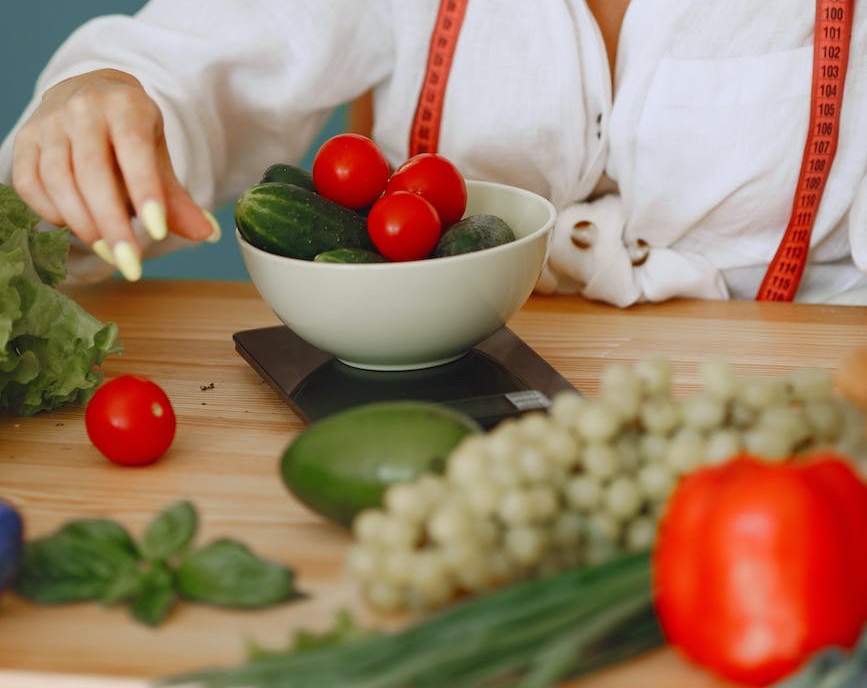
It turns out that her case is probably related to medical conditions, but she really got me thinking. What are more tools we can use to maintain our healthy weight? How about a food scale, measuring cups, and measuring spoons for starters?
It can be surprising when we find out that some fresh and whole foods are actually very high in calories. Most of these contain healthy fats, and some are higher in simple carbs. Even though they are “fattening,” that doesn’t mean that we can’t include them in our diets. It’s just means that we need to weigh or measure them!
According to the Academy of Nutrition and Dietetics, weighing what you eat can increase your awareness of portion sizes (1). It’s so easy to misjudge portion size, especially with foods that you can’t typically measure with a cup or measuring spoons.
My biggest mistakes with food portions have typically been with pasta. The nutrition facts on the pasta box are given before cooking, in ounces. Two ounces of dry pasta is usually one portion. Can you eyeball two ounces of spaghetti? I definitely cannot! And my mistakes are formed by many years of eating huge bowls of pasta in restaurants where they often give you two or even three servings! Yes, now I always weigh our pasta before cooking. And I’m often wrong even after weighing consistently for nearly a year.
Many foods can be measured with cups and measuring spoons – not the spoons you use for eating or the cups you use for drinking. But there is still the possibility of error here. Should the food be tightly packed into the cup, or just lightly spooned inside? A good example that bakers are probably familiar with is is brown sugar. How you fill the measuring cup can make quite a difference! Also, chopping the ingredients like nuts, versus measuring whole, will result in more calories. You can fit many more chopped nuts in a cup as there is less air space. For these reasons, weight is often more accurate.
What if you can’t weigh or measure, especially if you’re not at home? Try these ideas from WebMD for a single serving (2):
- Vegetables or fruits are about the size of your fist.
- Pasta is about the size of one scoop of ice cream.
- Meat, fish, or poultry is the size of a deck of cards or the size of your palm (minus the fingers).
- Snacks such as pretzels and chips are about the size of a cupped handful.
- An apple is the size of a baseball.
- A potato is the size of a computer mouse.
- A bagel is the size of a hockey puck.
- A pancake is the size of a CD.
- Steamed rice is the size of a cupcake wrapper.
- Cheese is the size of a pair of dice or the size of your whole thumb (from the tip to the base) (2).
Not sure how accurate these hand measurements are for me, as I have hands the size of catcher’s mitts! Seriously, there is a lot of variation in hand size. But this still gives you a “handy” frame of reference!
Weighing or measuring foods high in fats or simple carbs like avocado, olive oil, nut butters, seeds, nuts, dried fruits, honey, and maple syrup are particularly important. Small errors in foods with high caloric density can add up fast. Consider this example in Julie Compton’s article about journalism professor Brian Easter:
“I had the same lunch every day and it was a protein shake with an apple and peanut butter and it’s like, ‘Oh that’s totally a healthy lunch — this is a great lunch.’ But when I weighed peanut butter for the first time I was taking like three servings and I thought it was only one. So here I was thinking I’m eating 200 calories, but I’m really eating 600” (3).
Of course weighing and measuring food is up to each individual. But if you are struggling to understand why your weight has been moving in the wrong direction, it’s definitely worth a try. Some of us might find that it’s obsessive or can trigger some upsetting feelings. I’m not in that category, but then I only measure foods which I know are high in calories. It’s the compromise that works for me. What about you?
Weighing and measuring food is just one tool to help on our weight maintenance journeys. A similar one is tracking our intake, which I’ll research and blog about in the future. Do you have other tools that can help? Please let me know what works for you. Thanks!
(1). https://www.livestrong.com/article/390551-how-to-weigh-your-food-to-lose-weight/
 Maintain Weight Loss
Loving this,!Linda. Hate the idea but weighing food is going to be critical for me.
LikeLiked by 1 person
It’s the little things that count. You are doing great with your fitness!
LikeLike